Arduino, running the sketch you wrote
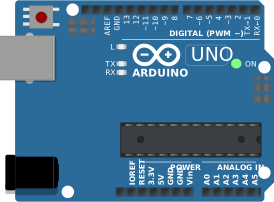
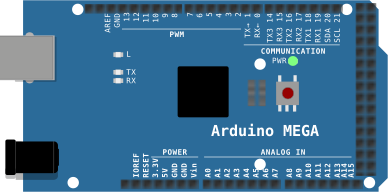
arduino-cli compiles it, an AVR8 core executes it instruction by instruction, and the LCD shows what the ATmega328P actually put on the bus. Uno, Nano, Mega and ATtiny85, no board on your desk.

Hardware is all about iteration. Velxio lets you wire a circuit, program the board and run it in seconds, real firmware on a real solver, right in the browser.





DFRobot · M5Stack links on this page are affiliate links: a purchase through them earns Velxio a small commission at no extra cost to you.
Nothing on this page is a scripted animation: the firmware is compiled and executed, and the circuit around it is solved.
arduino-cli compiles it, an AVR8 core executes it instruction by instruction, and the LCD shows what the ATmega328P actually put on the bus. Uno, Nano, Mega and ATtiny85, no board on your desk.
arduino-cli or ESP-IDF compiles the sketch, then AVR8, RP2040, RISC-V, Xtensa or ARM executes it instruction by instruction. What the OLED draws and what the serial monitor prints is what the chip actually did.

ngspice compiled to WebAssembly runs a full nodal analysis about 60 times a second. GPIO pins drive real nets, ADC inputs read solved node voltages, and probes report RMS, DC and current wherever you drop them.
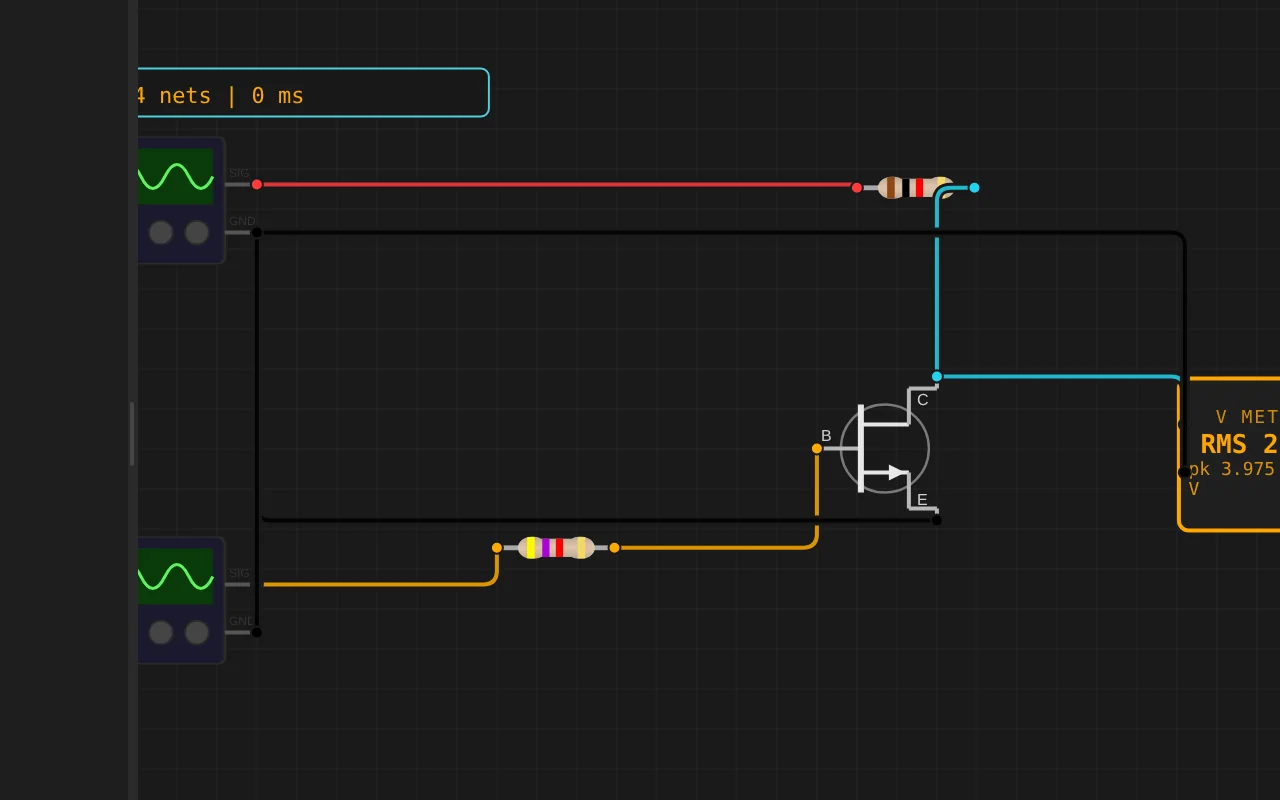
Adders, comparators, decoders, flip-flops and a 1-bit ALU slice: no microcontroller anywhere, just gates, switches and LEDs solved as a real net. The classroom half of electronics, without the breadboard.
The M5Stack Cardputer with its keyboard, Seeed's round display keeping time, Pimoroni's Badger 2350 driving e-paper, and DFRobot's UNIHIKER M10 in the catalogue alongside them. Their makers sent the hardware so the emulation could be checked against the real thing.
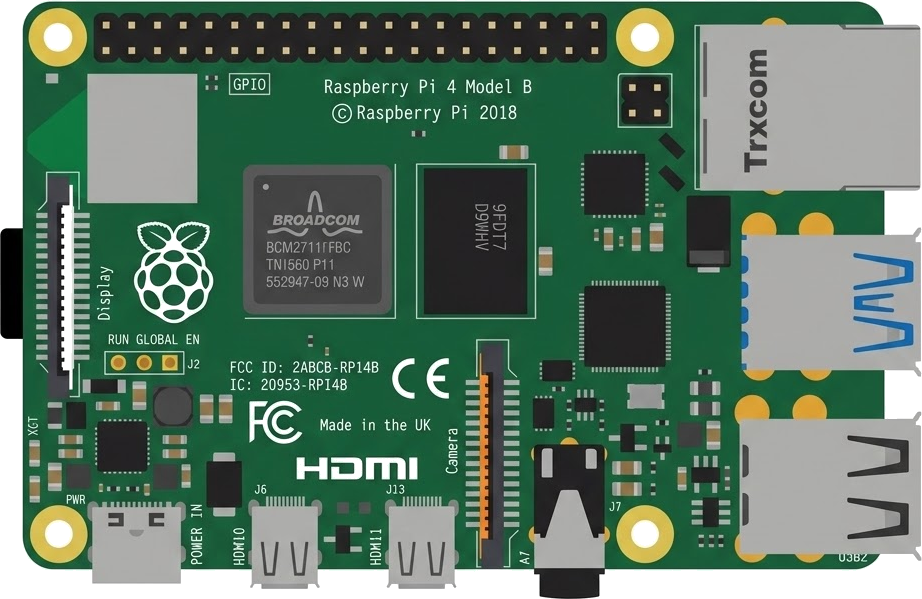
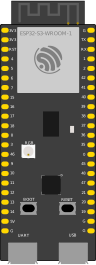
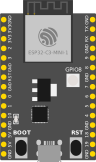
35 boards across 6 CPU architectures — AVR8, ARM Cortex-M, ARM Cortex-A, RISC-V, Xtensa, and Linux. Including partner boards from Pimoroni, M5Stack, Seeed Studio and DFRobot. All running locally, no cloud needed.






One institution contract gives every student in the class a full Pro account. No per-seat checkout, no card details in a classroom.
Private projects, BOM and schematic exports and GitHub Sync, for everyone enrolled.
Billed once to your institution, per semester or per year. Volume pricing on request for large cohorts.
Arduino, ESP32, RP2040, STM32, ATtiny and Raspberry Pi, with SPICE analog solved alongside the firmware. Not a sandboxed mock.
The simulator stays free forever, WiFi with internet included. Paid plans unlock the Linux and STM32 boards, custom WiFi networks and the local network gateway. Maker and Pro add the AI agent; No AI leaves it out.
Discover the simulator + light AI help.
The full workbench, zero AI. You write every line.
For makers shipping real circuits with AI help.
Private projects, GitHub Sync and BOM exports.
Questions, bugs and ideas: the Discord and the issue tracker are open, and so is every line of the simulator.
An interactive ESP32-S3 circuit simulation you can run free in your browser on Velxio, by 25040118.
/*
 * 婴儿床安睡监测系统 —— ESP32-S3 / Velxio 仿真
 *
 * 屏幕 ILI9341(240x320): CS=10 DC=8 RST=9 MOSI=11 SCK=12(MISO 不用,脚 13 让给按键)
 * SHT31 温湿度         : SDA=4  SCL=5
 * MPU6050 六轴         : SDA=4  SCL=5(与 SHT31 共用 I2C,地址 0x68)
 * AD8232 心电          : AOUT=1
 * 声音传感器           : AOUT=2
 * 光敏                 : SIG=6
 * 风扇 L293D           : EN=7  IN1=15 IN2=16
 * 加热块 MOSFET        : SIG=17
 * WS2812 24 灯         : DIN=18(安睡模式下随摇篮曲变化)
 * 有源蜂鸣器           : SIG=21(安睡模式下播放摇篮曲)
 * 环境灯 Grove RGB LED : DIN=3(WS2813 单总线)
 * 摇篮舵机             : SIG=14(安睡模式开启后 0°→90°→0° 缓慢往复)
 * 4x4 矩阵按键         : R1~R4=38,39,47,13  C1~C4=35,36,37,45
 * ESP32-CAM 联动       : 5V/GND,TX=40->CAM RX,RX=48<-CAM TX
 * 网页服务             : 内置 HTTP 服务器,STA 连不上自动开热点 SafeSleep/safesleep
 * HX711 称重           : DOUT=41 SCK=42(接反/接偏会自动扫描纠正)
 */

#include <SPI.h>
#include <Adafruit_GFX.h>
#include <Adafruit_ILI9341.h>
#include <Wire.h>
#include <Adafruit_SHT31.h>
#include <Adafruit_NeoPixel.h>
#include <Adafruit_MPU6050.h>
#include <Adafruit_Sensor.h>
#include <WiFi.h>
#include <WebServer.h>

// ---------------- 引脚 ----------------
#define PIN_TFT_CS    10
#define PIN_TFT_DC     8
#define PIN_TFT_RST    9
#define PIN_TFT_MOSI  11
#define PIN_TFT_SCK   12

// 4x4 矩阵按键:行 R1~R4 / 列 C1~C4(8 根线)
#define PIN_KP_R1  38
#define PIN_KP_R2  39
#define PIN_KP_R3  47
#define PIN_KP_R4  13   // 原 TFT MISO,ILI9341 只写不读,可挪用
#define PIN_KP_C1  35
#define PIN_KP_C2  36
#define PIN_KP_C3  37
#define PIN_KP_C4  45

#define PIN_SDA  4
#define PIN_SCL  5

#define PIN_ECG  1
#define PIN_SND  2
#define PIN_LDR  6

#define PIN_FAN_EN   7
#define PIN_FAN_IN1 15
#define PIN_FAN_IN2 16
#define PIN_HEAT    17

#define PIN_LED     18
#define LED_COUNT   24
#define PIN_BUZZER  21

#define PIN_LAMP     3   // Grove RGB LED (WS2813) DIN
#define PIN_SERVO   14   // 摇篮舵机 PWM(信号线接 GPIO14)

#define PIN_CAM_TX  40   // ESP32-S3 TX -> ESP32-CAM RX
#define PIN_CAM_RX  48   // ESP32-S3 RX <- ESP32-CAM TX

#define PIN_HX_DT   41
#define PIN_HX_SCK  42

// ---------------- 阈值 ----------------
constexpr float TEMP_HOT   = 28.0f;   // 高于此值开风扇
constexpr float TEMP_TARGET = 20.0f;  // 加热目标温度
constexpr float TEMP_BAND   = 2.0f;   // 比例带:18~20℃ 之间功率线性下降
constexpr float TEMP_SAFE_MAX = 26.0f;// 超温保护:强制关加热 + 风扇全速
constexpr float HUM_WET    = 75.0f;   // 湿度报警
constexpr float BPM_HIGH   = 110.0f;  // 心率报警
constexpr int   SND_LOUD   = 2500;    // 声音过大
constexpr int   LDR_DARK   = 400;     // 光敏过低
constexpr float WEIGHT_MIN_KG = 0.40f;// 低于此重量视为婴儿不在床

constexpr float HX711_COUNTS_PER_GRAM = 420.0f;   // 模块属性 Counts per gram
constexpr long  HX711_TARE_OFFSET     = 50000;    // 模块属性 Tare offset

// 自动识别时扫描的空闲引脚(避开 USB 19/20 与 PSRAM 35~37)
const uint8_t HX_CANDIDATES[] = {42, 41, 40, 48};
const int HX_CAND_COUNT = sizeof(HX_CANDIDATES) / sizeof(HX_CANDIDATES[0]);

// ---------------- 器件对象 ----------------
Adafruit_ILI9341 tft = Adafruit_ILI9341(PIN_TFT_CS, PIN_TFT_DC, PIN_TFT_RST);
Adafruit_SHT31   sht;
Adafruit_MPU6050 mpu;
Adafruit_NeoPixel strip(LED_COUNT,