Arduino, running the sketch you wrote
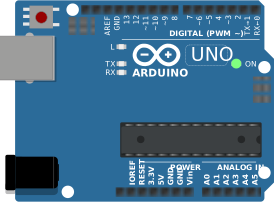
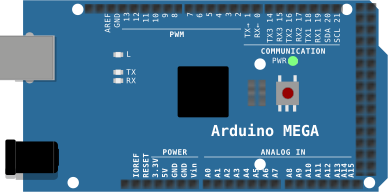
arduino-cli compiles it, an AVR8 core executes it instruction by instruction, and the LCD shows what the ATmega328P actually put on the bus. Uno, Nano, Mega and ATtiny85, no board on your desk.

Hardware is all about iteration. Velxio lets you wire a circuit, program the board and run it in seconds, real firmware on a real solver, right in the browser.





Nothing on this page is a scripted animation: the firmware is compiled and executed, and the circuit around it is solved.
arduino-cli compiles it, an AVR8 core executes it instruction by instruction, and the LCD shows what the ATmega328P actually put on the bus. Uno, Nano, Mega and ATtiny85, no board on your desk.
arduino-cli or ESP-IDF compiles the sketch, then AVR8, RP2040, RISC-V, Xtensa or ARM executes it instruction by instruction. What the OLED draws and what the serial monitor prints is what the chip actually did.

ngspice compiled to WebAssembly runs a full nodal analysis about 60 times a second. GPIO pins drive real nets, ADC inputs read solved node voltages, and probes report RMS, DC and current wherever you drop them.
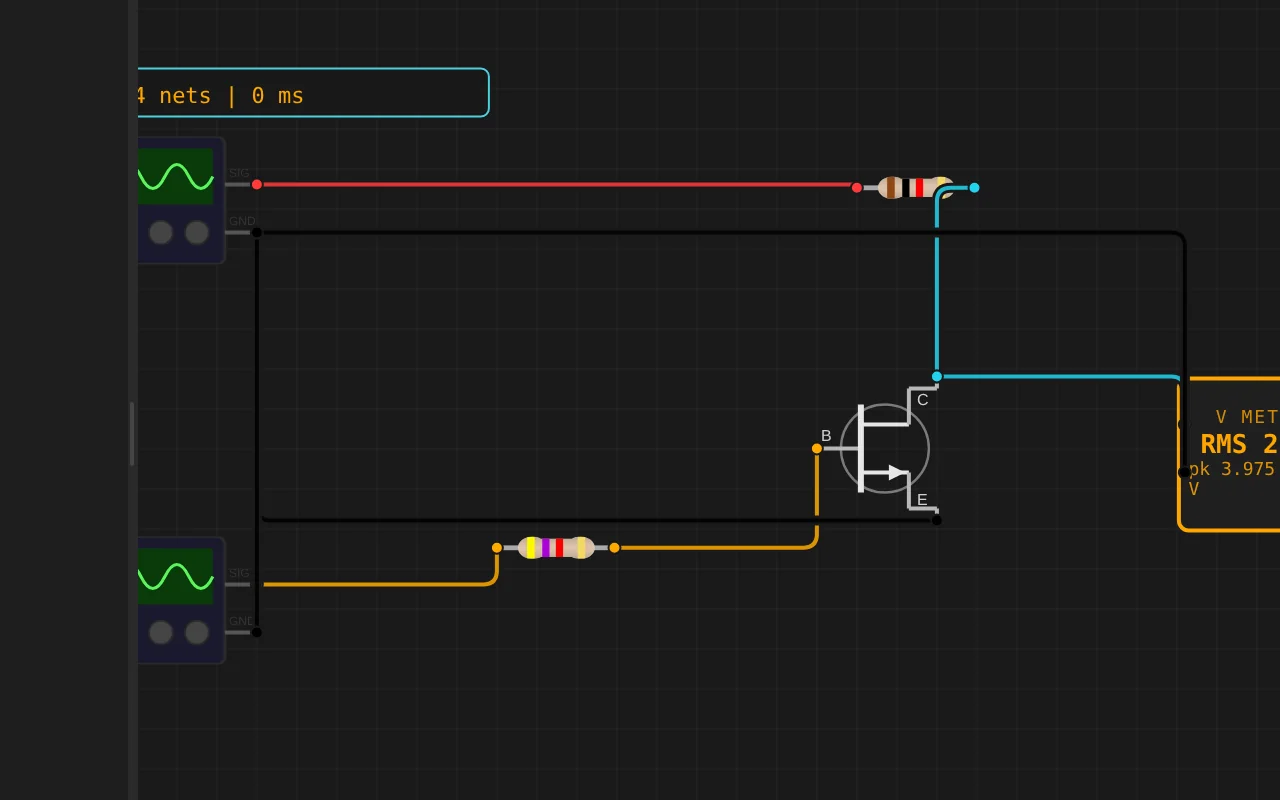
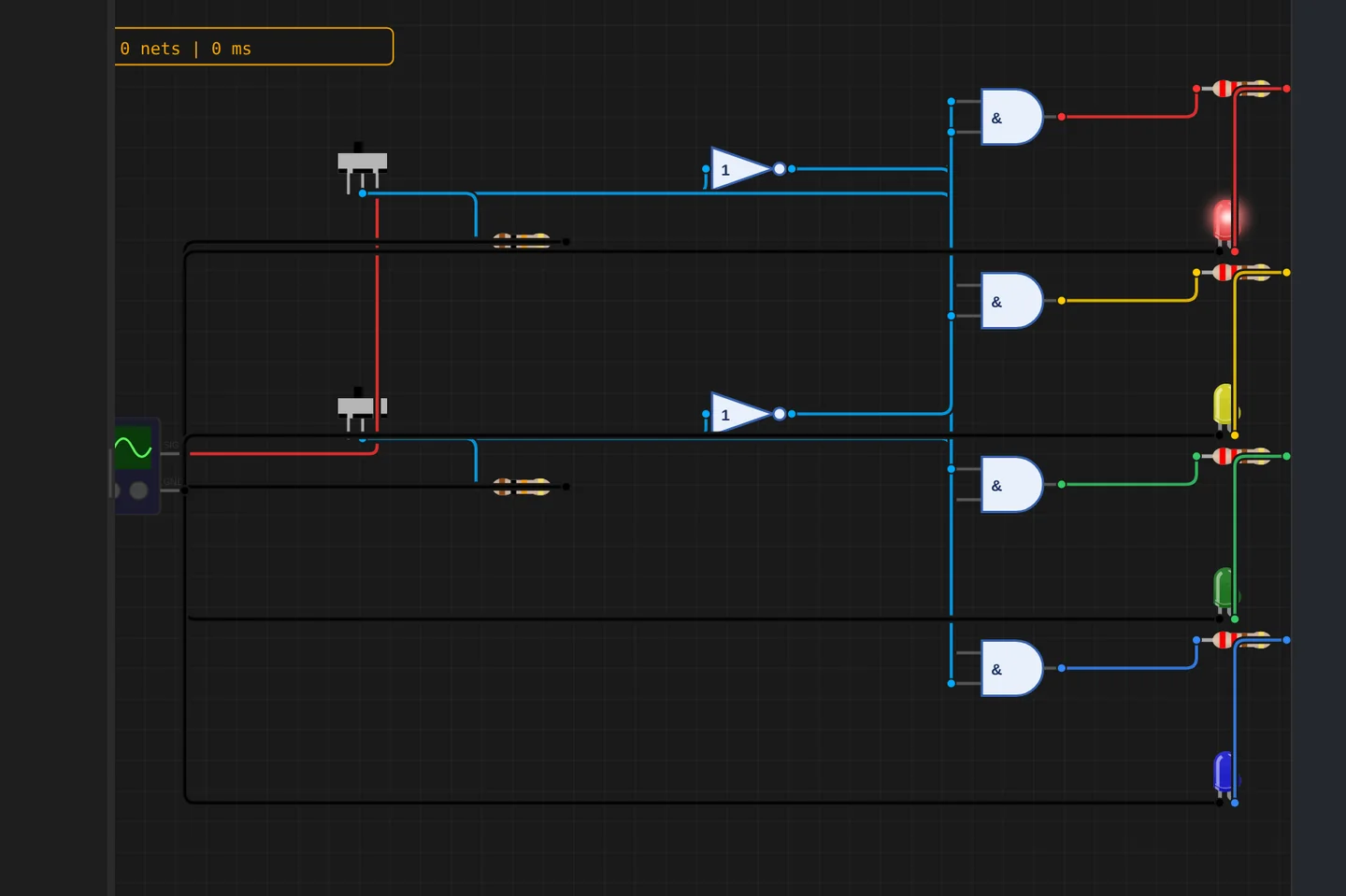
Adders, comparators, decoders, flip-flops and a 1-bit ALU slice: no microcontroller anywhere, just gates, switches and LEDs solved as a real net. The classroom half of electronics, without the breadboard.
The M5Stack Cardputer with its keyboard, Seeed's round display keeping time, Pimoroni's Badger 2350 driving e-paper, and DFRobot's UNIHIKER M10 in the catalogue alongside them. Their makers sent the hardware so the emulation could be checked against the real thing.
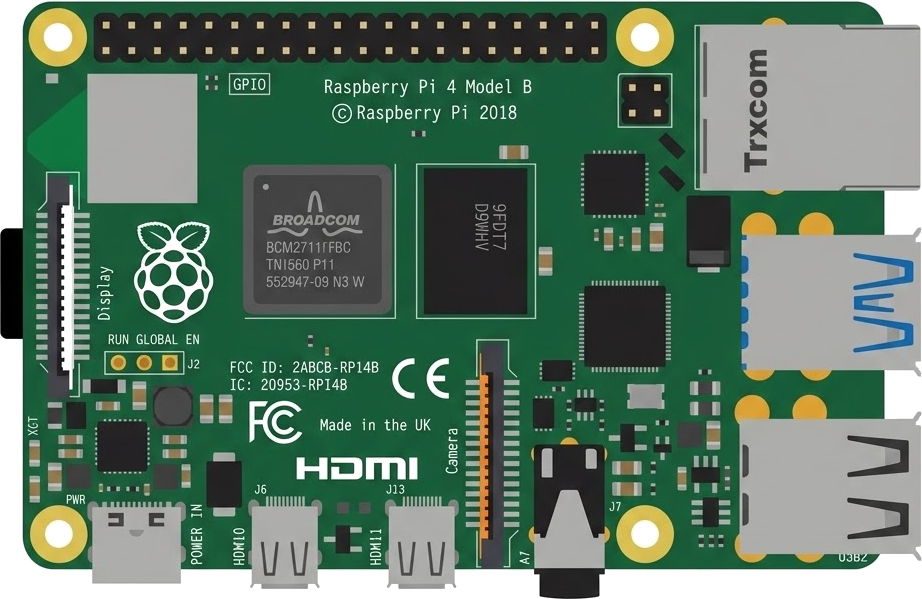
35 boards across 6 CPU architectures — AVR8, ARM Cortex-M, ARM Cortex-A, RISC-V, Xtensa, and Linux. Including partner boards from Pimoroni, M5Stack, Seeed Studio and DFRobot. All running locally, no cloud needed.






One institution contract gives every student in the class a full Pro account. No per-seat checkout, no card details in a classroom.
Private projects, BOM and schematic exports, GitHub Sync and the offline desktop app, for everyone enrolled.
Billed once to your institution, per semester or per year. Volume pricing on request for large cohorts.
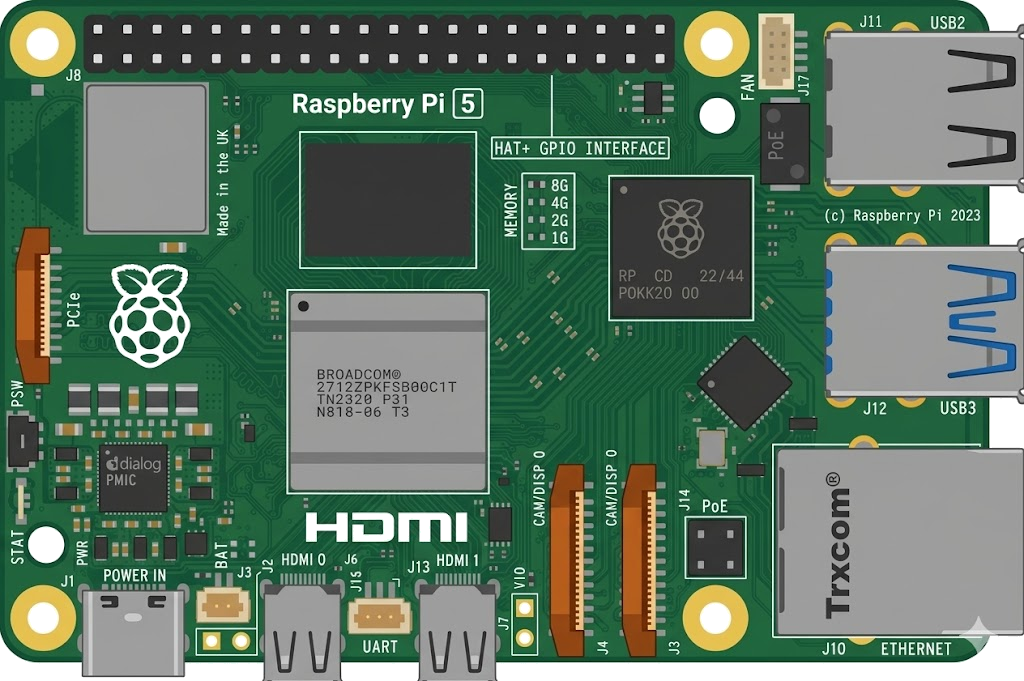
Arduino, ESP32, RP2040, STM32, ATtiny and Raspberry Pi, with SPICE analog solved alongside the firmware. Not a sandboxed mock.
The simulator stays free forever. Paid plans raise the daily AI quota and unlock the Linux boards, private projects and the offline desktop app.
Discover the simulator + light AI help.
For makers shipping real circuits with AI help.
Private projects, GitHub Sync and BOM exports.
Questions, bugs and ideas: the Discord and the issue tracker are open, and so is every line of the simulator.
An interactive ESP32-S3 circuit simulation you can run free in your browser on Velxio, by itsmebenn.
#include <Wire.h>
#include <LiquidCrystal_I2C.h>
#include <Keypad.h>
#include <ESP32Servo.h>

#define I2C_SDA 8
#define I2C_SCL 9

LiquidCrystal_I2C lcd(0x27, 16, 2); // Coba ubah ke 0x3F jika layar blank suatu saat

const byte ROWS = 4;
const byte COLS = 4;

char keys[ROWS][COLS] = {
  {'1','2','3','A'},
  {'4','5','6','B'},
  {'7','8','9','C'},
  {'*','0','#','D'}
};

// Menggunakan formasi Ultra-Safe Pins
byte rowPins[ROWS] = {7,6,5,4};
byte colPins[COLS] = {13,12,11,10};

Keypad keypad = Keypad(makeKeymap(keys), rowPins, colPins, ROWS, COLS);

String correctPIN = "1234"; // PIN Master Anda
String inputPIN = "";       // Memori penampung input pengguna
int wrongAttempts = 0;      // Penghitung percobaan salah
const int MAX_ATTEMPTS = 3; // Batas maksimal salah PIN

Servo myServo;
int servoPin = 37;
int pos = 0;

bool opened = false;

void setup() {
  Serial.begin(115200);
  Wire.begin(I2C_SDA, I2C_SCL);

  myServo.attach(servoPin);

  lcd.init();
  lcd.backlight();
  lcd.setCursor(0, 0);
  lcd.print("Enter PIN:");
}

void loop() {
  char key = keypad.getKey();

  if (key) {

    // --- 1. Jika menekan tombol '#' (ENTER) ---
    if (key == '#') {
      lcd.clear();

      if (inputPIN == correctPIN) {
        // --- JIKA PIN BENAR ---
        lcd.setCursor(0, 0);
        lcd.print("ACCESS GRANTED");
        lcd.setCursor(0, 1);
        lcd.print("Welcome Home!");
        wrongAttempts = 0; // Reset kesalahan jika sukses

        // TODO: Perintah Motor Servo Buka Pintu masuk di sini
        myServo.write(180);

        delay(3000);
      } else {
        // --- JIKA PIN SALAH ---
        wrongAttempts++;

        if (wrongAttempts >= MAX_ATTEMPTS) {
          // Eksekusi Lockdown langsung di sini
          lcd.setCursor(0, 0);
          lcd.print("SYSTEM LOCKDOWN!");
          lcd.setCursor(0, 1);
          lcd.print("Please Wait...");
          delay(30000000); // Tahan sistem

          wrongAttempts = 0; // Reset setelah hukuman selesai
        } else {
          // Peringatan salah PIN biasa
          lcd.setCursor(0, 0);
          lcd.print("ACCESS DENIED!");
          lcd.setCursor(0, 1);
          lcd.print("Attempts left: ");
          lcd.print(MAX_ATTEMPTS - wrongAttempts);
          delay(2000);
        }
      }

      // Kembalikan ke layar awal hanya setelah semua proses (sukses/gagal/lockdown) selesai
      inputPIN = "";
      lcd.clear();
      lcd.print("Enter PIN:");
    }

    // --- 2. Jika menekan tombol '*' (CLEAR) ---
    else if (key == '*') {
      inputPIN = ""; // Hapus memori ketikan
      lcd.clear();
      lcd.print("Enter PIN:");
    }

    // --- 3. Jika menekan angka/huruf (INPUT PIN) ---
    else {
      inputPIN += key; // Tambahkan karakter ke memori sementara

      lcd.setCursor(0, 1);
      // Cetak bintang sebanyak jumlah angka yang sudah ditekan
      for (int i = 0; i < inputPIN.length(); i++) {
        lcd.print("*");
      }
    }