Arduino, running the sketch you wrote
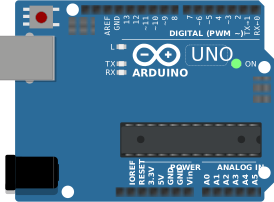
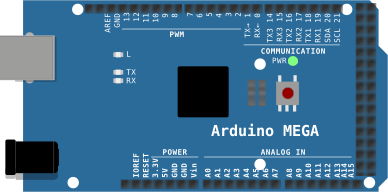
arduino-cli compiles it, an AVR8 core executes it instruction by instruction, and the LCD shows what the ATmega328P actually put on the bus. Uno, Nano, Mega and ATtiny85, no board on your desk.

Hardware is all about iteration. Velxio lets you wire a circuit, program the board and run it in seconds, real firmware on a real solver, right in the browser.





DFRobot · M5Stack links on this page are affiliate links: a purchase through them earns Velxio a small commission at no extra cost to you.
Nothing on this page is a scripted animation: the firmware is compiled and executed, and the circuit around it is solved.
arduino-cli compiles it, an AVR8 core executes it instruction by instruction, and the LCD shows what the ATmega328P actually put on the bus. Uno, Nano, Mega and ATtiny85, no board on your desk.
arduino-cli or ESP-IDF compiles the sketch, then AVR8, RP2040, RISC-V, Xtensa or ARM executes it instruction by instruction. What the OLED draws and what the serial monitor prints is what the chip actually did.

ngspice compiled to WebAssembly runs a full nodal analysis about 60 times a second. GPIO pins drive real nets, ADC inputs read solved node voltages, and probes report RMS, DC and current wherever you drop them.
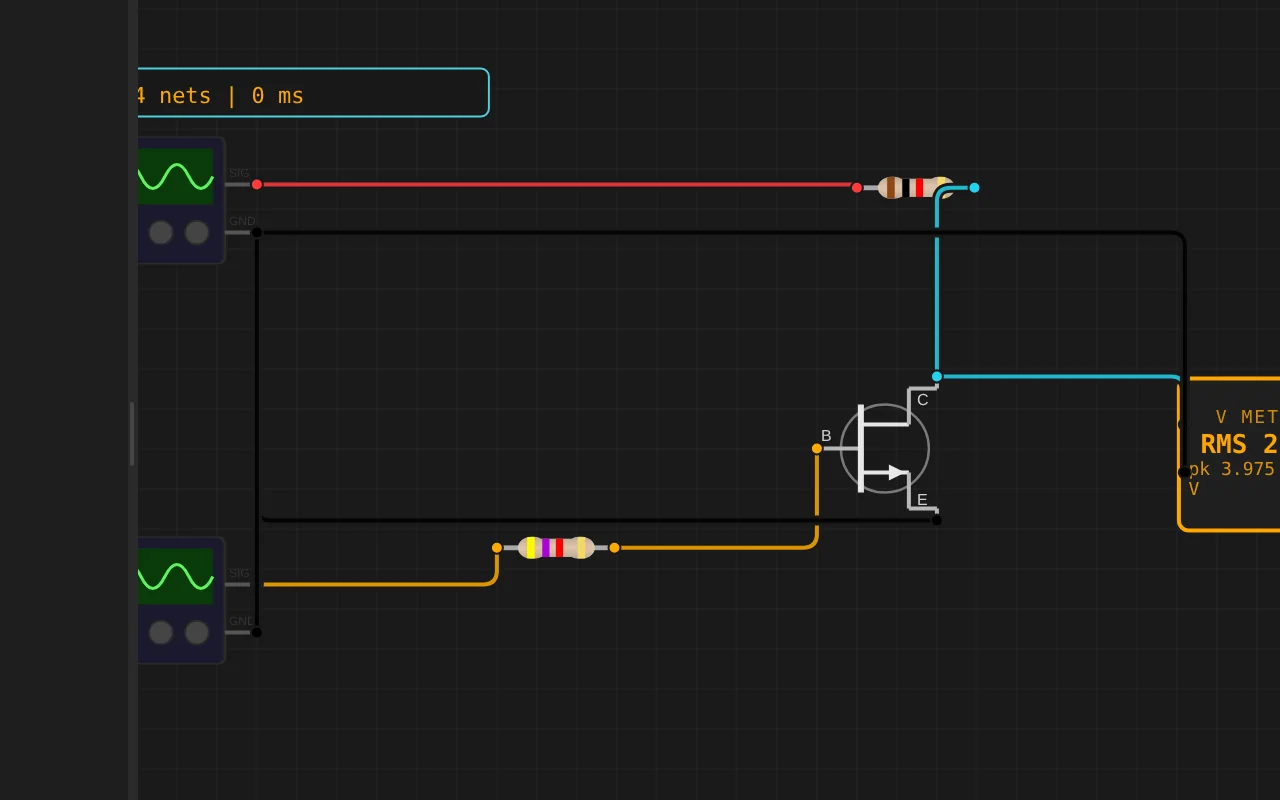
Adders, comparators, decoders, flip-flops and a 1-bit ALU slice: no microcontroller anywhere, just gates, switches and LEDs solved as a real net. The classroom half of electronics, without the breadboard.
The M5Stack Cardputer with its keyboard, Seeed's round display keeping time, Pimoroni's Badger 2350 driving e-paper, and DFRobot's UNIHIKER M10 in the catalogue alongside them. Their makers sent the hardware so the emulation could be checked against the real thing.
35 boards across 6 CPU architectures — AVR8, ARM Cortex-M, ARM Cortex-A, RISC-V, Xtensa, and Linux. Including partner boards from Pimoroni, M5Stack, Seeed Studio and DFRobot. All running locally, no cloud needed.






One institution contract gives every student in the class a full Pro account. No per-seat checkout, no card details in a classroom.
Private projects, BOM and schematic exports, GitHub Sync and the offline desktop app, for everyone enrolled.
Billed once to your institution, per semester or per year. Volume pricing on request for large cohorts.
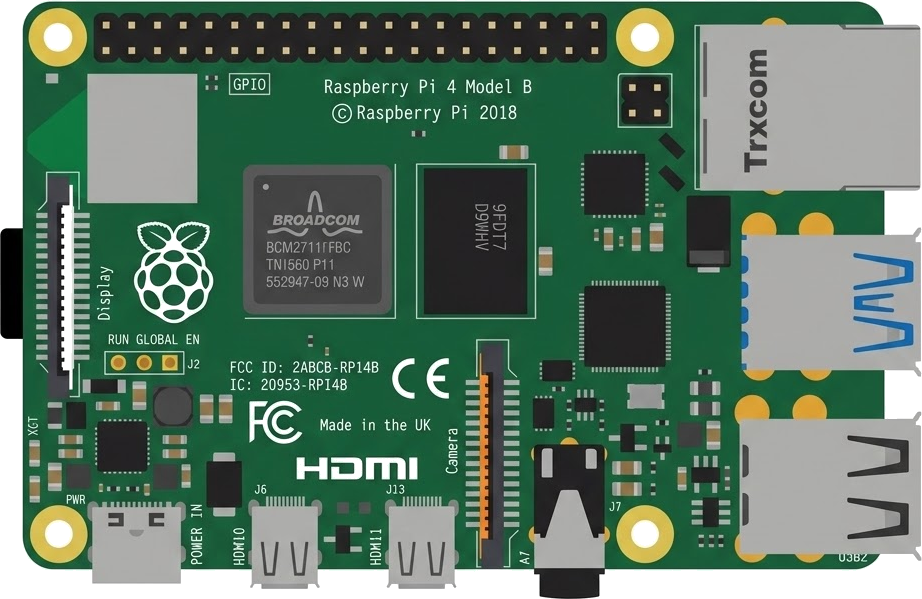
Arduino, ESP32, RP2040, STM32, ATtiny and Raspberry Pi, with SPICE analog solved alongside the firmware. Not a sandboxed mock.
The simulator stays free forever, WiFi with internet included. Paid plans unlock the Linux and STM32 boards, custom WiFi networks, the local network gateway and the offline desktop app. Maker and Pro add the AI agent; No AI leaves it out.
Discover the simulator + light AI help.
The full workbench, zero AI. You write every line.
For makers shipping real circuits with AI help.
Private projects, GitHub Sync and BOM exports.
Questions, bugs and ideas: the Discord and the issue tracker are open, and so is every line of the simulator.
An interactive Esp32 Devkit C V4 circuit simulation you can run free in your browser on Velxio, by alireza-cs94.
// Busicom141PF_Emulator.ino
// True Intel 4004 CPU emulation of the Busicom 141-PF, running on ESP32.
// No physical calculator hardware is driven -- this build uses the Serial
// Monitor as a virtual front panel (keys typed in, "display" printed out).
//
// REQUIRED: a ROM image file. This emulator executes real 4004 machine
// code, but Anthropic's Claude will not fabricate the original 141-PF
// firmware bytes from memory -- that is a specific historical binary, not
// architecture. Get a legitimate dump from a preservation project (see
// README.md), name it "141pf.rom" (up to 1280 bytes: 4 or 5 x 256-byte
// 4001 pages), and upload it to the ESP32's LittleFS filesystem with the
// Arduino "ESP32 Sketch Data Upload" tool (put it in a /data folder next
// to this .ino) -- or just drop any other 4004 binary in to test the CPU
// core itself (see /rom_selftest for a tiny bundled diagnostic program).
//
// Board: any ESP32 dev board. No external wiring needed for this mode.

#include <LittleFS.h>
#include "Intel4004.h"
#include "Busicom141PF.h"

Busicom141PF machine;

// ---- tiny built-in self-test program, used if 141pf.rom isn't found ----
// Counts 0..9 into R0, printing each value out ROM-port 1 (WRR) so you can
// see the CPU core, bus, and Serial panel working even with no ROM file.
static const uint8_t selftest[] = {
  0xD0,  // addr0: LDM 0     ; ACC = 0
  0xB0,  // addr1: XCH R0    ; R0 = 0
         // loop (addr 2):
  0xA0,  // addr2: LD R0     ; ACC = R0
  0xE2,  // addr3: WRR       ; output ACC to ROM chip0's I/O port
  0x60,  // addr4: INC R0    ; R0 = R0 + 1
  0x40,
  0x02,  // addr5-6: JUN 0x002  ; jump back to loop
};

unsigned long lastStepMicros = 0;
const unsigned long CYCLE_TIME_US = 11;  // real 4004: 10.8us per 8-clock machine cycle

void printPanel(uint8_t romChip, uint8_t val) {
  Serial.printf("[ROM%u port] = 0x%X   shiftReg=0x%03X  ACC=%X CY=%d PC=0x%03X\n",
                romChip, val, machine.shiftRegister, machine.cpu.ACC, machine.cpu.CY, machine.cpu.PC);
}

void printRAMPort(uint8_t chip, uint8_t val) {
  Serial.printf("[RAM%u port] = 0x%X\n", chip, val);
}

void loadROMFromFS() {
  if (!LittleFS.begin(true)) {
    Serial.println("LittleFS mount failed -- running built-in self-test program instead.");
    machine.loadROM(selftest, sizeof(selftest));
    return;
  }
  File f = LittleFS.open("/141pf.rom", "r");
  if (!f) {
    Serial.println("No /141pf.rom found in LittleFS -- running built-in self-test program instead.");
    Serial.println("(See README.md for how to obtain and upload a real ROM dump.)");
    machine.loadROM(selftest, sizeof(selftest));
    return;
  }
  static uint8_t buf[BUSICOM_ROM_SIZE];
  size_t n = f.read(buf, sizeof(buf));
  f.close();
  machine.loadROM(buf, n);
  Serial.printf("Loaded %u bytes from /141pf.rom\n", (unsigned)n);
}

void setup() {
  Serial.begin(115200);
  delay(300);
  Serial.println("\n=== Busicom 141-PF / Intel 4004 emulator (ESP32) ===");
  machine.begin();
  machine.onROM