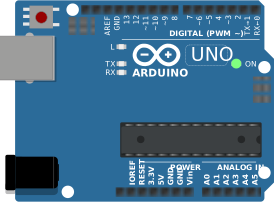
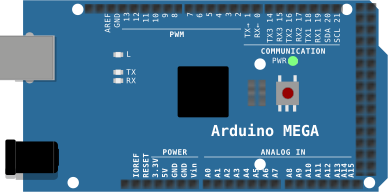
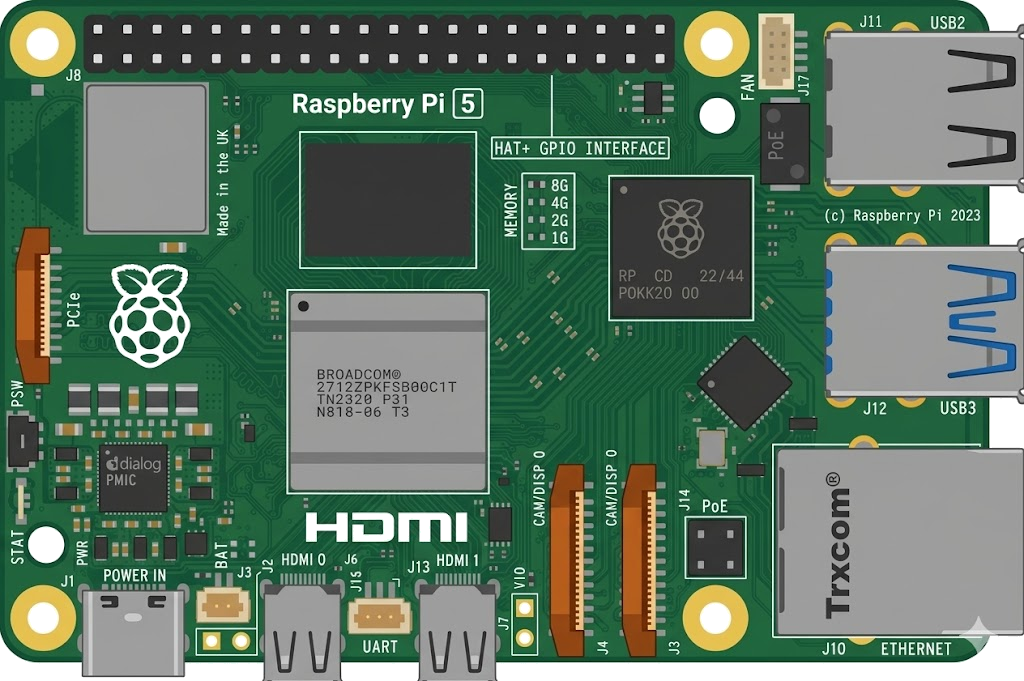
Arduino, running the sketch you wrote
arduino-cli compiles it, an AVR8 core executes it instruction by instruction, and the LCD shows what the ATmega328P actually put on the bus. Uno, Nano, Mega and ATtiny85, no board on your desk.

Hardware is all about iteration. Velxio lets you wire a circuit, program the board and run it in seconds, real firmware on a real solver, right in the browser.





DFRobot · M5Stack links on this page are affiliate links: a purchase through them earns Velxio a small commission at no extra cost to you.
Nothing on this page is a scripted animation: the firmware is compiled and executed, and the circuit around it is solved.
arduino-cli compiles it, an AVR8 core executes it instruction by instruction, and the LCD shows what the ATmega328P actually put on the bus. Uno, Nano, Mega and ATtiny85, no board on your desk.
arduino-cli or ESP-IDF compiles the sketch, then AVR8, RP2040, RISC-V, Xtensa or ARM executes it instruction by instruction. What the OLED draws and what the serial monitor prints is what the chip actually did.

ngspice compiled to WebAssembly runs a full nodal analysis about 60 times a second. GPIO pins drive real nets, ADC inputs read solved node voltages, and probes report RMS, DC and current wherever you drop them.
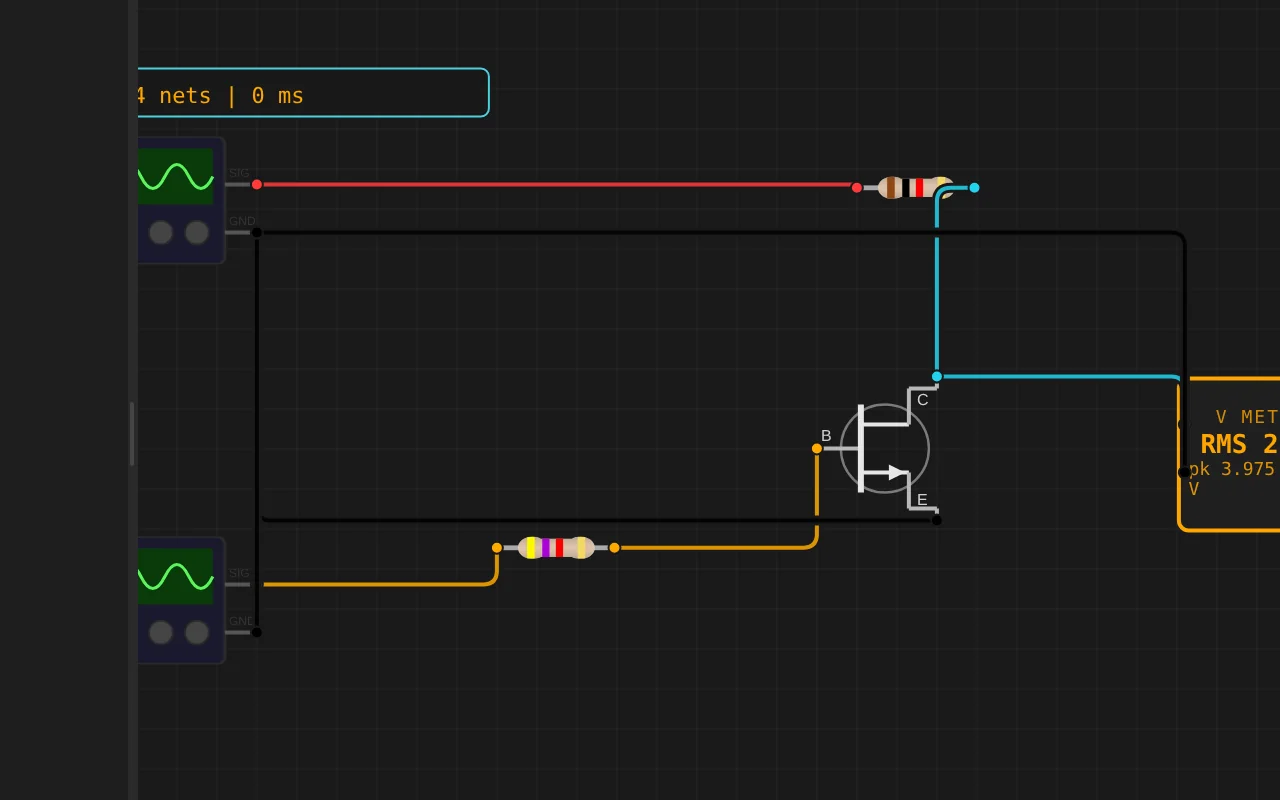
Adders, comparators, decoders, flip-flops and a 1-bit ALU slice: no microcontroller anywhere, just gates, switches and LEDs solved as a real net. The classroom half of electronics, without the breadboard.
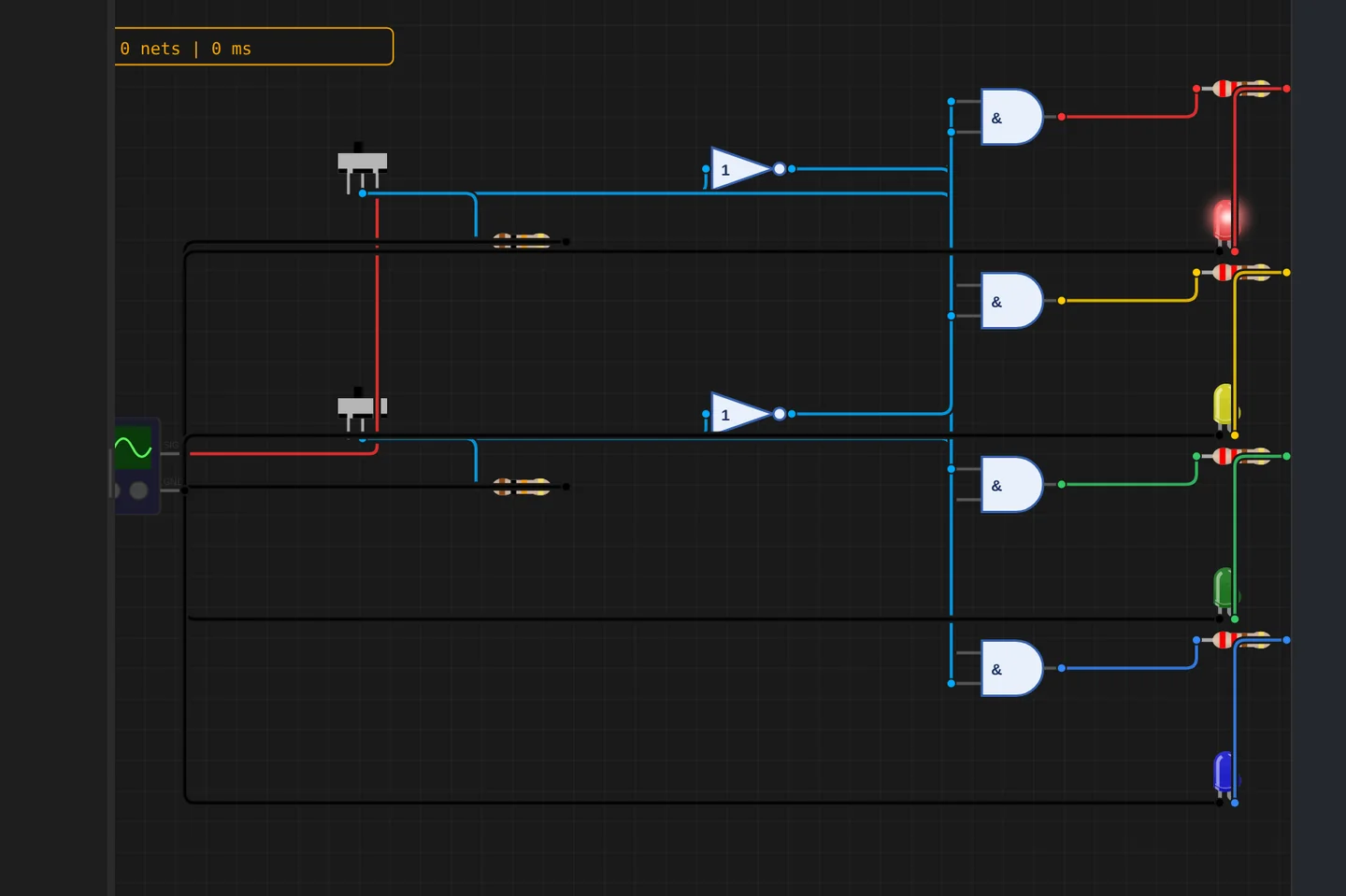
The M5Stack Cardputer with its keyboard, Seeed's round display keeping time, Pimoroni's Badger 2350 driving e-paper, and DFRobot's UNIHIKER M10 in the catalogue alongside them. Their makers sent the hardware so the emulation could be checked against the real thing.
35 boards across 6 CPU architectures — AVR8, ARM Cortex-M, ARM Cortex-A, RISC-V, Xtensa, and Linux. Including partner boards from Pimoroni, M5Stack, Seeed Studio and DFRobot. All running locally, no cloud needed.






One institution contract gives every student in the class a full Pro account. No per-seat checkout, no card details in a classroom.
Private projects, BOM and schematic exports, GitHub Sync and the offline desktop app, for everyone enrolled.
Billed once to your institution, per semester or per year. Volume pricing on request for large cohorts.
Arduino, ESP32, RP2040, STM32, ATtiny and Raspberry Pi, with SPICE analog solved alongside the firmware. Not a sandboxed mock.
The simulator stays free forever. Paid plans unlock the Linux and STM32 boards, WiFi and the offline desktop app. Maker and Pro add the AI agent; No AI leaves it out.
Discover the simulator + light AI help.
The full workbench, zero AI. You write every line.
For makers shipping real circuits with AI help.
Private projects, GitHub Sync and BOM exports.
Questions, bugs and ideas: the Discord and the issue tracker are open, and so is every line of the simulator.
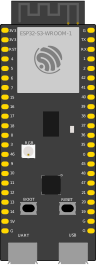
An interactive ESP32-S3 circuit simulation you can run free in your browser on Velxio, by a2982887131.
// ==================== 引脚定义 ====================
const uint8_t LED_PINS[8] = {4, 5, 6, 7, 15, 16, 17, 18};
const uint8_t BUZZER_PIN  = 21;
const uint8_t BUTTON_PIN  = 14;

const uint8_t LED_COUNT = 8;

// ==================== 音符频率(C大调) ====================
#define NOTE_C4  262
#define NOTE_D4  294
#define NOTE_E4  330
#define NOTE_F4  349
#define NOTE_G4  392
#define NOTE_A4  440
#define NOTE_B4  494
#define NOTE_C5  523

// ==================== 音符结构体 ====================
struct Note {
  uint16_t freq;   // 频率(Hz),0 表示休止符
  uint16_t dur;    // 时值(ms)
};

// 节奏基准:四分音符 350ms,二分音符 700ms
const uint16_t Q = 350;
const uint16_t H = 700;

// ==================== 曲谱:小星星 ====================
const Note melody[] = {
  // 一闪一闪亮晶晶
  {NOTE_C4, Q}, {NOTE_C4, Q}, {NOTE_G4, Q}, {NOTE_G4, Q},
  {NOTE_A4, Q}, {NOTE_A4, Q}, {NOTE_G4, H},
  // 满天都是小星星
  {NOTE_F4, Q}, {NOTE_F4, Q}, {NOTE_E4, Q}, {NOTE_E4, Q},
  {NOTE_D4, Q}, {NOTE_D4, Q}, {NOTE_C4, H},
  // 挂在天上放光明
  {NOTE_G4, Q}, {NOTE_G4, Q}, {NOTE_F4, Q}, {NOTE_F4, Q},
  {NOTE_E4, Q}, {NOTE_E4, Q}, {NOTE_D4, H},
  // 好像许多小眼睛
  {NOTE_G4, Q}, {NOTE_G4, Q}, {NOTE_F4, Q}, {NOTE_F4, Q},
  {NOTE_E4, Q}, {NOTE_E4, Q}, {NOTE_D4, H},
  // 一闪一闪亮晶晶
  {NOTE_C4, Q}, {NOTE_C4, Q}, {NOTE_G4, Q}, {NOTE_G4, Q},
  {NOTE_A4, Q}, {NOTE_A4, Q}, {NOTE_G4, H},
  // 满天都是小星星
  {NOTE_F4, Q}, {NOTE_F4, Q}, {NOTE_E4, Q}, {NOTE_E4, Q},
  {NOTE_D4, Q}, {NOTE_D4, Q}, {NOTE_C4, H},
};

const int MELODY_LEN = sizeof(melody) / sizeof(melody[0]);

// ==================== 全局状态 ====================
bool isPlaying     = false;   // 是否正在播放
bool stopRequested = false;   // 播放中收到停止请求

// ==================== LED 控制 ====================
void allLedsOff() {
  for (uint8_t i = 0; i < LED_COUNT; i++) {
    digitalWrite(LED_PINS[i], LOW);
  }
}

// 根据当前音符序号,点亮对应位置的 LED(跑马灯效果)
void showLedAt(int index) {
  allLedsOff();
  digitalWrite(LED_PINS[index % LED_COUNT], HIGH);
}

// ==================== 按键读取(带软件消抖) ====================
// 需被周期性调用(约每 5ms 一次)
bool buttonDown() {
  static uint8_t lowCount = 0;
  if (digitalRead(BUTTON_PIN) == LOW) {
    if (lowCount < 3) lowCount++;      // 连续 3 次读到低电平才算按下
  } else {
    lowCount = 0;
  }
  return (lowCount >= 3);
}

// ==================== 播放单个音符 ====================
void playNote(int idx) {
  const Note &n = melody[idx];
  unsigned long start = millis();

  // ---- 发声 & 亮灯阶段(占音符时值的 3/4,形成断奏节奏感)----
  if (n.freq > 0) {
    tone(BUZZER_PIN, n.freq);          // 无源蜂鸣器输出方波
  }
  showLedAt(idx);                      // 点亮一个 LED,位置随音符推进

  unsigned long onTime = (unsigned long)n.dur * 3 / 4;
  while (millis() - start < onTime) {
    if (buttonDown()) {                // 播放中检测按键 -> 停止
      stopRequested = true;
      break;
    }
    delay(5);
  }

  // ---- 熄灭 & 静音,剩余时间作为音符间隔 ----
  noTone(BUZZER_PIN);
  allLedsOff();

  while (millis() - start < n.dur) {
    if (buttonDown()) {
      stopRequested = true;
      break;
    }
    delay(5);
  }
}

// ==================== 播放整首曲子 ====================
void playSong() {
  // 等