Arduino, running the sketch you wrote
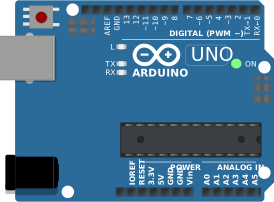
arduino-cli compiles it, an AVR8 core executes it instruction by instruction, and the LCD shows what the ATmega328P actually put on the bus. Uno, Nano, Mega and ATtiny85, no board on your desk.

Hardware is all about iteration. Velxio lets you wire a circuit, program the board and run it in seconds, real firmware on a real solver, right in the browser.





DFRobot · M5Stack links on this page are affiliate links: a purchase through them earns Velxio a small commission at no extra cost to you.
Nothing on this page is a scripted animation: the firmware is compiled and executed, and the circuit around it is solved.
arduino-cli compiles it, an AVR8 core executes it instruction by instruction, and the LCD shows what the ATmega328P actually put on the bus. Uno, Nano, Mega and ATtiny85, no board on your desk.
arduino-cli or ESP-IDF compiles the sketch, then AVR8, RP2040, RISC-V, Xtensa or ARM executes it instruction by instruction. What the OLED draws and what the serial monitor prints is what the chip actually did.

ngspice compiled to WebAssembly runs a full nodal analysis about 60 times a second. GPIO pins drive real nets, ADC inputs read solved node voltages, and probes report RMS, DC and current wherever you drop them.
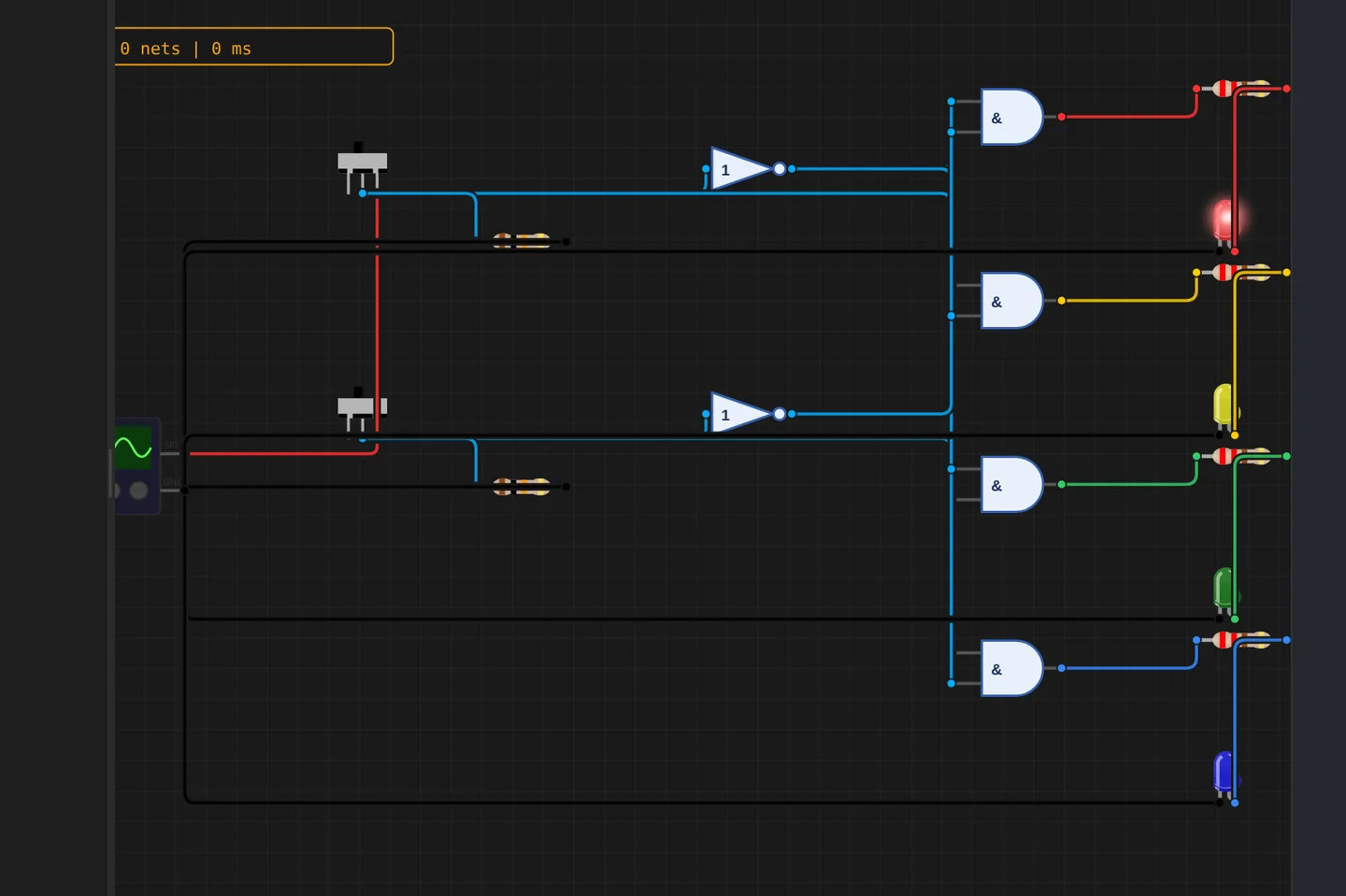
Adders, comparators, decoders, flip-flops and a 1-bit ALU slice: no microcontroller anywhere, just gates, switches and LEDs solved as a real net. The classroom half of electronics, without the breadboard.
The M5Stack Cardputer with its keyboard, Seeed's round display keeping time, Pimoroni's Badger 2350 driving e-paper, and DFRobot's UNIHIKER M10 in the catalogue alongside them. Their makers sent the hardware so the emulation could be checked against the real thing.
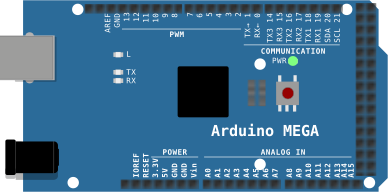
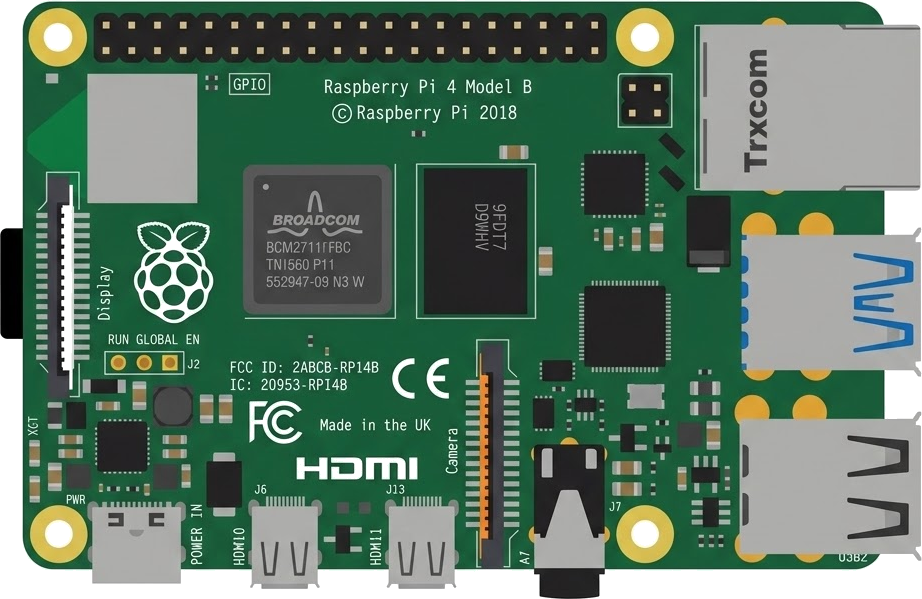
35 boards across 6 CPU architectures — AVR8, ARM Cortex-M, ARM Cortex-A, RISC-V, Xtensa, and Linux. Including partner boards from Pimoroni, M5Stack, Seeed Studio and DFRobot. All running locally, no cloud needed.






One institution contract gives every student in the class a full Pro account. No per-seat checkout, no card details in a classroom.
Private projects, BOM and schematic exports, GitHub Sync and the offline desktop app, for everyone enrolled.
Billed once to your institution, per semester or per year. Volume pricing on request for large cohorts.
Arduino, ESP32, RP2040, STM32, ATtiny and Raspberry Pi, with SPICE analog solved alongside the firmware. Not a sandboxed mock.
The simulator stays free forever, WiFi with internet included. Paid plans unlock the Linux and STM32 boards, custom WiFi networks, the local network gateway and the offline desktop app. Maker and Pro add the AI agent; No AI leaves it out.
Discover the simulator + light AI help.
The full workbench, zero AI. You write every line.
For makers shipping real circuits with AI help.
Private projects, GitHub Sync and BOM exports.
Questions, bugs and ideas: the Discord and the issue tracker are open, and so is every line of the simulator.
An interactive ESP32-S3 circuit simulation you can run free in your browser on Velxio, by lsct1111.
#include <Wire.h>
#include <Adafruit_GFX.h>
#include <Adafruit_SSD1306.h>
#include <nvs_flash.h>
#include <esp_task_wdt.h>
#include <esp32-hal-timer.h>
#include <EspUsbDevice.h>          // 替代 USBHIDConsumerControl

// ==================== 引脚定义 ====================
#define PIN_BTN_START 10
#define PIN_BTN_FUNC  11
#define PIN_BTN_ADD   12
#define PIN_BTN_SUB   13
#define PIN_BTN_MEM   14
#define PIN_OLED_SDA  8
#define PIN_OLED_SCL  9
#define PIN_mosfet    35
#define OLED_ADDR     0x3C
#define SCREEN_W      128
#define SCREEN_H      64

#define KEY_LONG_US      800000UL
#define KEY_DEBOUNCE_US  20000UL
#define EVENT_LOCK_US    150000UL
#define ACCEL_PERIOD_US  100000UL

#define X_MIN_US     0UL
#define X_MAX_US     5000000UL
#define Y_MIN_US     10UL
#define Y_MAX_US     5000000UL
#define Z_MIN_US     0UL
#define Z_MAX_US     5000000UL
#define B_MIN        1
#define B_MAX        99
#define GROUP_CNT    5

// ==================== USB HID 音量减(EspUsbDevice) ====================
EspUsbDevice device;
EspUsbDeviceHidConsumerControl media(device);

#define HID_RELEASE_DELAY_US  5000ULL

bool     hidPressPending   = false;
uint64_t hidPressAt        = 0;
bool     hidReleasePending = false;
uint64_t hidReleaseAt      = 0;

// ==================== 数据结构 ====================
struct ParamGroup {
  uint32_t x_us;
  uint32_t y_us;
  uint32_t z_us;
  uint16_t b;
};

ParamGroup groups[GROUP_CNT];
uint8_t curGroup = 1;

enum EditRow {ROW_GROUP=0, ROW_X, ROW_Y, ROW_Z, ROW_B, ROW_MAX};
int8_t selRow = ROW_GROUP;

uint64_t addLastAccelTs = 0;
uint64_t subLastAccelTs = 0;
bool addAccelActive = false;
bool subAccelActive = false;

uint64_t savedShowUntil = 0;
uint64_t keyLastEvtTs[5] = {0,0,0,0,0};

// ==================== 时序状态(硬件定时器 ISR 共享) ====================
enum SeqState { SEQ_IDLE, SEQ_WAIT_PRE, SEQ_PULSE_ON, SEQ_PULSE_OFF };
volatile SeqState seqState = SEQ_IDLE;
volatile uint16_t seqPulseCnt = 0;
volatile ParamGroup seqParam;

hw_timer_t *seqTimer = NULL;

Adafruit_SSD1306 display(SCREEN_W, SCREEN_H, &Wire, -1);
bool gOledReady = false;

struct KeyState {
  uint8_t pin;
  bool lastRaw;
  uint64_t pressStart;
  bool longTriggered;
  const char* name;
};
KeyState keys[5] = {
  {PIN_BTN_START, HIGH, 0, false, "START"},
  {PIN_BTN_FUNC,  HIGH, 0, false, "FUNC"},
  {PIN_BTN_ADD,   HIGH, 0, false, "ADD"},
  {PIN_BTN_SUB,   HIGH, 0, false, "SUB"},
  {PIN_BTN_MEM,   HIGH, 0, false, "MEM"}
};
enum KeyIdx { K_START, K_FUNC, K_ADD, K_SUB, K_MEM };

// ==================== 硬件定时器中断服务程序 ====================
void IRAM_ATTR onSeqTimer()
{
  uint32_t nextUs = 0;

  switch (seqState) {
    case SEQ_WAIT_PRE:
      seqPulseCnt = 0;
      gpio_set_level((gpio_num_t)PIN_mosfet, 1);
      seqState = SEQ_PULSE_ON;
      nextUs = seqParam.y_us;
      break;

    case SEQ_PULSE_ON:
      gpio_set_level((gpio_num_t)PIN_mosfet, 0);
      seqState = SEQ_PULSE_OFF;
      nextUs = (seqParam.z_us > 0) ? seqParam.z_us : 1;
      break;

    case SEQ_PULSE_OFF:
      seqPulseCnt++;
      if (s