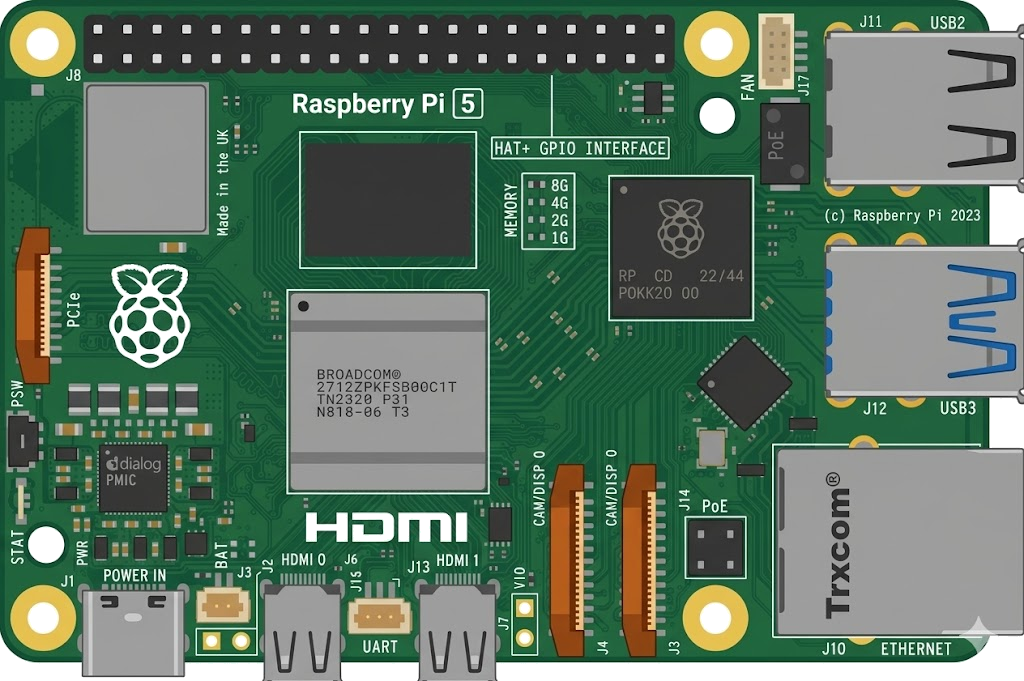
Arduino, running the sketch you wrote
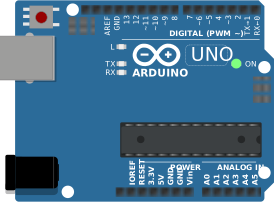
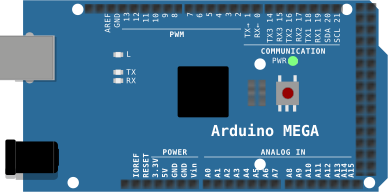
arduino-cli compiles it, an AVR8 core executes it instruction by instruction, and the LCD shows what the ATmega328P actually put on the bus. Uno, Nano, Mega and ATtiny85, no board on your desk.

Hardware is all about iteration. Velxio lets you wire a circuit, program the board and run it in seconds, real firmware on a real solver, right in the browser.





DFRobot · M5Stack links on this page are affiliate links: a purchase through them earns Velxio a small commission at no extra cost to you.
Nothing on this page is a scripted animation: the firmware is compiled and executed, and the circuit around it is solved.
arduino-cli compiles it, an AVR8 core executes it instruction by instruction, and the LCD shows what the ATmega328P actually put on the bus. Uno, Nano, Mega and ATtiny85, no board on your desk.
arduino-cli or ESP-IDF compiles the sketch, then AVR8, RP2040, RISC-V, Xtensa or ARM executes it instruction by instruction. What the OLED draws and what the serial monitor prints is what the chip actually did.

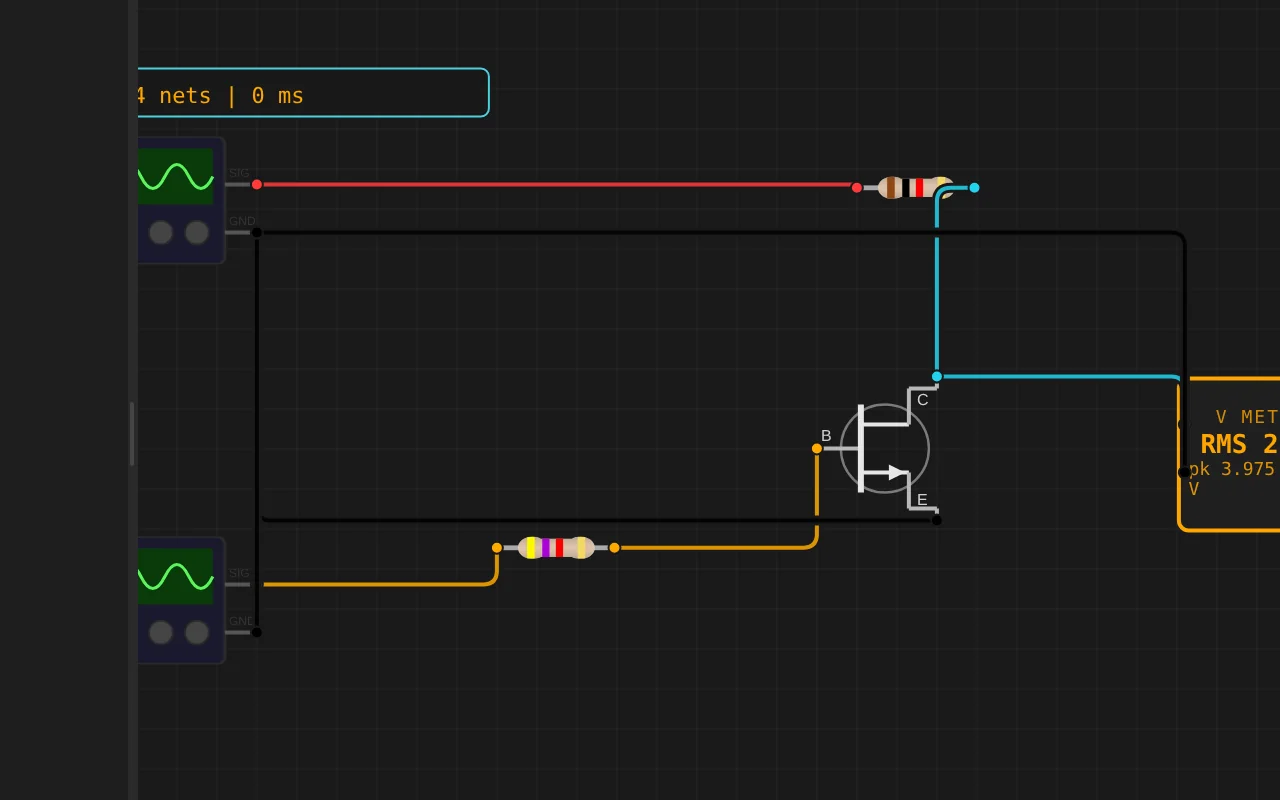
ngspice compiled to WebAssembly runs a full nodal analysis about 60 times a second. GPIO pins drive real nets, ADC inputs read solved node voltages, and probes report RMS, DC and current wherever you drop them.
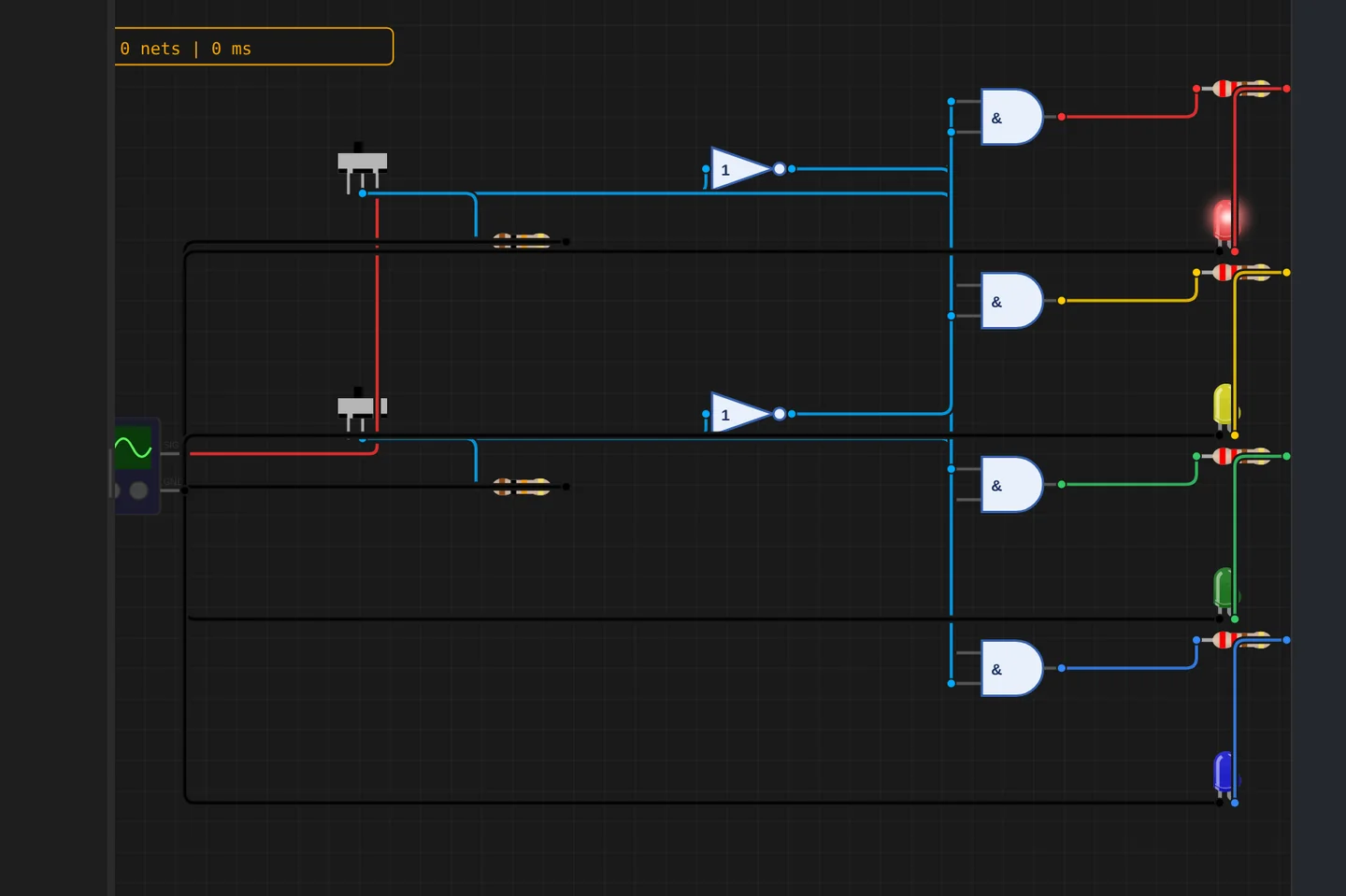
Adders, comparators, decoders, flip-flops and a 1-bit ALU slice: no microcontroller anywhere, just gates, switches and LEDs solved as a real net. The classroom half of electronics, without the breadboard.
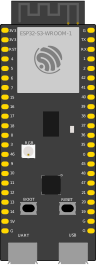
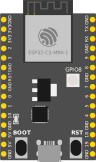
The M5Stack Cardputer with its keyboard, Seeed's round display keeping time, Pimoroni's Badger 2350 driving e-paper, and DFRobot's UNIHIKER M10 in the catalogue alongside them. Their makers sent the hardware so the emulation could be checked against the real thing.
35 boards across 6 CPU architectures — AVR8, ARM Cortex-M, ARM Cortex-A, RISC-V, Xtensa, and Linux. Including partner boards from Pimoroni, M5Stack, Seeed Studio and DFRobot. All running locally, no cloud needed.






One institution contract gives every student in the class a full Pro account. No per-seat checkout, no card details in a classroom.
Private projects, BOM and schematic exports, GitHub Sync and the offline desktop app, for everyone enrolled.
Billed once to your institution, per semester or per year. Volume pricing on request for large cohorts.
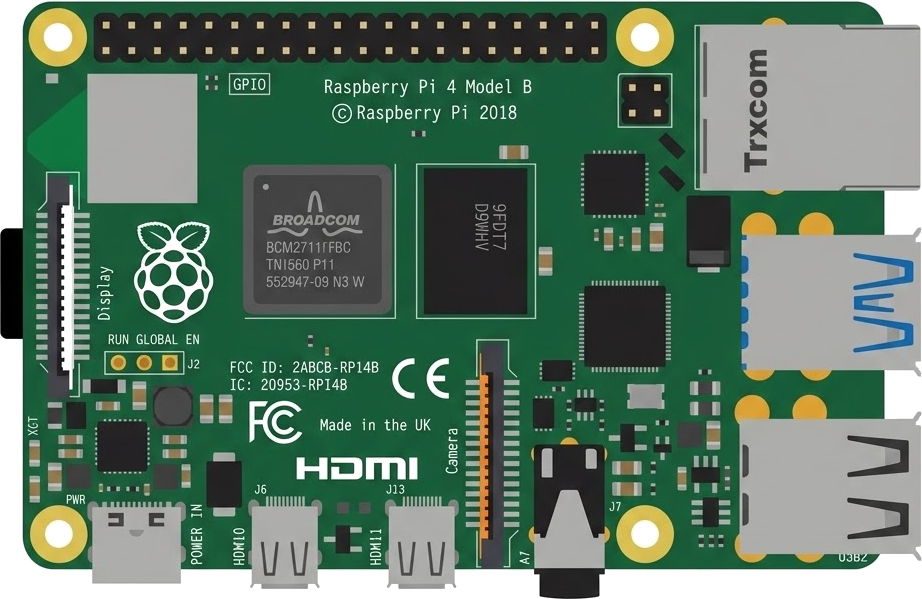
Arduino, ESP32, RP2040, STM32, ATtiny and Raspberry Pi, with SPICE analog solved alongside the firmware. Not a sandboxed mock.
The simulator stays free forever. Paid plans unlock the Linux and STM32 boards, WiFi and the offline desktop app. Maker and Pro add the AI agent; No AI leaves it out.
Discover the simulator + light AI help.
The full workbench, zero AI. You write every line.
For makers shipping real circuits with AI help.
Private projects, GitHub Sync and BOM exports.
Questions, bugs and ideas: the Discord and the issue tracker are open, and so is every line of the simulator.
An interactive ESP32 circuit simulation you can run free in your browser on Velxio, by fisyamska.
#include <SPI.h>
#include <Adafruit_GFX.h>
#include <Adafruit_ILI9341.h>
#include <Adafruit_SSD1306.h>
#include <math.h>
#include "RTClib.h"
#include <Wire.h>
// #include <OneWire.h>
// #include <DallasTemperature.h>
#include "digital_720pt7b.h"
#include "digital_77pt7b.h"

RTC_DS3231 rtc;

char daysOfTheWeek[7][12] = {"Sunday", "Monday", "Tuesday", "Wednesday", "Thursday", "Friday", "Saturday"};

#define TFT_SCK  18
#define TFT_MOSI 23
#define TFT_MISO 19
#define TFT_DC    2
#define TFT_CS    15
#define TFT_RST   4

SPIClass tftSPI(VSPI);
Adafruit_ILI9341 tft = Adafruit_ILI9341(&tftSPI, TFT_DC, TFT_CS, TFT_RST);


#define I2C_SDA_2 32
#define I2C_SCL_2 33

TwoWire I2C_Kedua = TwoWire(1);

#define SCREEN_WIDTH 128
#define SCREEN_HIGHT 64
#define OLED_RESET   -1

Adafruit_SSD1306 oled1(SCREEN_WIDTH,SCREEN_HIGHT,&Wire,OLED_RESET);

Adafruit_SSD1306 oled2(SCREEN_WIDTH,SCREEN_HIGHT,&I2C_Kedua,OLED_RESET);

/*/====== vaiabel senso DS18B20====//
const int oneWireBus = 26;

OneWire oneWire(oneWireBus);

DallasTemperature sensors(&oneWire);

// --- Konstanta Tachometer ---
#define TACHO_CX      64
#define TACHO_CY      60
#define TACHO_RADIUS  55
#define MAX_RPM       12000
#define PI            3.14159265

// --- Bitmap Ikon Bensin ---
const unsigned char PROGMEM gasIcon[] = {
  0x00, 0x00, 0x07, 0xf0, 0x0c, 0x18, 0x08, 0x18, 0x08, 0x38, 0x08, 0x68, 0x08, 0xc8, 0x08, 0x88,
  0x0b, 0x88, 0x0c, 0x88, 0x0b, 0x88, 0x08, 0x88, 0x08, 0x88, 0x08, 0x88, 0x0f, 0xf8, 0x00, 0x00
};

// --- Variabel State (Simulasi Sensor) ---
int speedDummy = 75;
int batteryLevel = 80;
bool seinKiri = false;
bool seinKanan = false;
bool engineWarning = false;
bool overheatWarning = false;
int rpmDummy = 0;
int rpmArah = 1;
bool lowFuel = false;

// ==========================================
// MANAJEMEN WAKTU (Non-Blocking dengan millis)
// ==========================================
unsigned long previousMillisTFT = 0;
unsigned long previousMillisOLED1 = 0;
unsigned long previousMillisOLED2 = 0;
unsigned long previousMillisSein = 0;
unsigned long previousMillisSensor = 0;

// Interval Pembaruan (dalam milidetik)
const long intervalTFT    = 500;  // Jam, Kecepatan, Baterai di TFT diperbarui tiap 500ms
const long intervalOLED1  = 50;   // Tachometer butuh refresh cepat agar jarum mulus (50ms)
const long intervalOLED2  = 1000; // Info lingkungan cukup 1 detik sekali
const long intervalSein   = 500;  // Kedipan sein tiap 500ms (jika aktif)
const long intervalSensor = 100;  // Kecepatan baca sensor simulasi (100ms)
*/

// --- Warna Kustom (RGB565) ---
// Membuat warna biru gelap khas LCD Grand Filano
#define FILANO_BG     0x018D  // Biru Gelap
#define FILANO_TEXT   0x4A69  // Biru Keabu-abuan (Warna angka mati / redup)
#define FILANO_ACTIVE 0xFFFF  // Putih (Warna angka menyala) atau bisa pakai Cyan pekat
#define FILANO_CYAN   0x07FF  // Cyan terang untuk aksen garis

// --- Variabel State Dummy ---
int speedDummy = 0;
unsigned long previousMillisTFT = 0;


void setup() {
  Seria