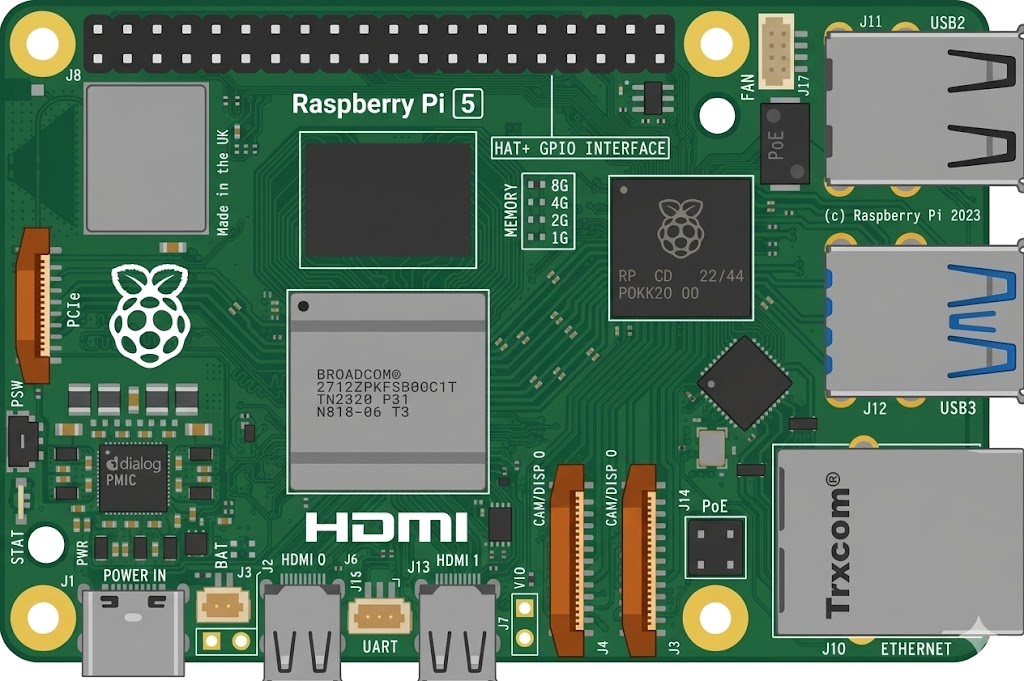
Arduino, running the sketch you wrote
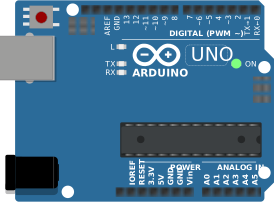
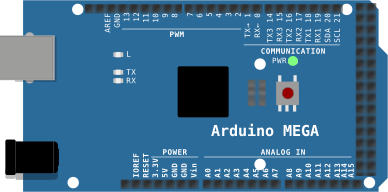
arduino-cli compiles it, an AVR8 core executes it instruction by instruction, and the LCD shows what the ATmega328P actually put on the bus. Uno, Nano, Mega and ATtiny85, no board on your desk.

Hardware is all about iteration. Velxio lets you wire a circuit, program the board and run it in seconds, real firmware on a real solver, right in the browser.





DFRobot · M5Stack links on this page are affiliate links: a purchase through them earns Velxio a small commission at no extra cost to you.
Nothing on this page is a scripted animation: the firmware is compiled and executed, and the circuit around it is solved.
arduino-cli compiles it, an AVR8 core executes it instruction by instruction, and the LCD shows what the ATmega328P actually put on the bus. Uno, Nano, Mega and ATtiny85, no board on your desk.
arduino-cli or ESP-IDF compiles the sketch, then AVR8, RP2040, RISC-V, Xtensa or ARM executes it instruction by instruction. What the OLED draws and what the serial monitor prints is what the chip actually did.

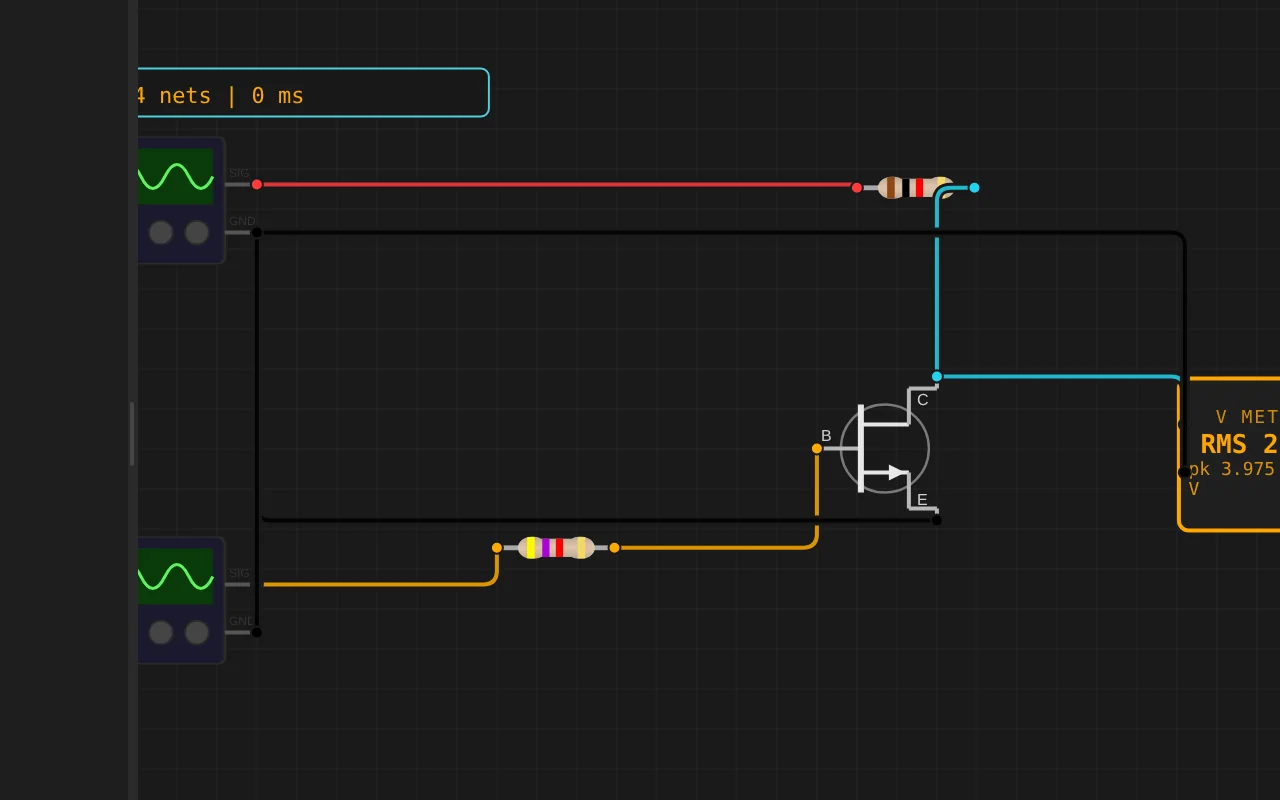
ngspice compiled to WebAssembly runs a full nodal analysis about 60 times a second. GPIO pins drive real nets, ADC inputs read solved node voltages, and probes report RMS, DC and current wherever you drop them.
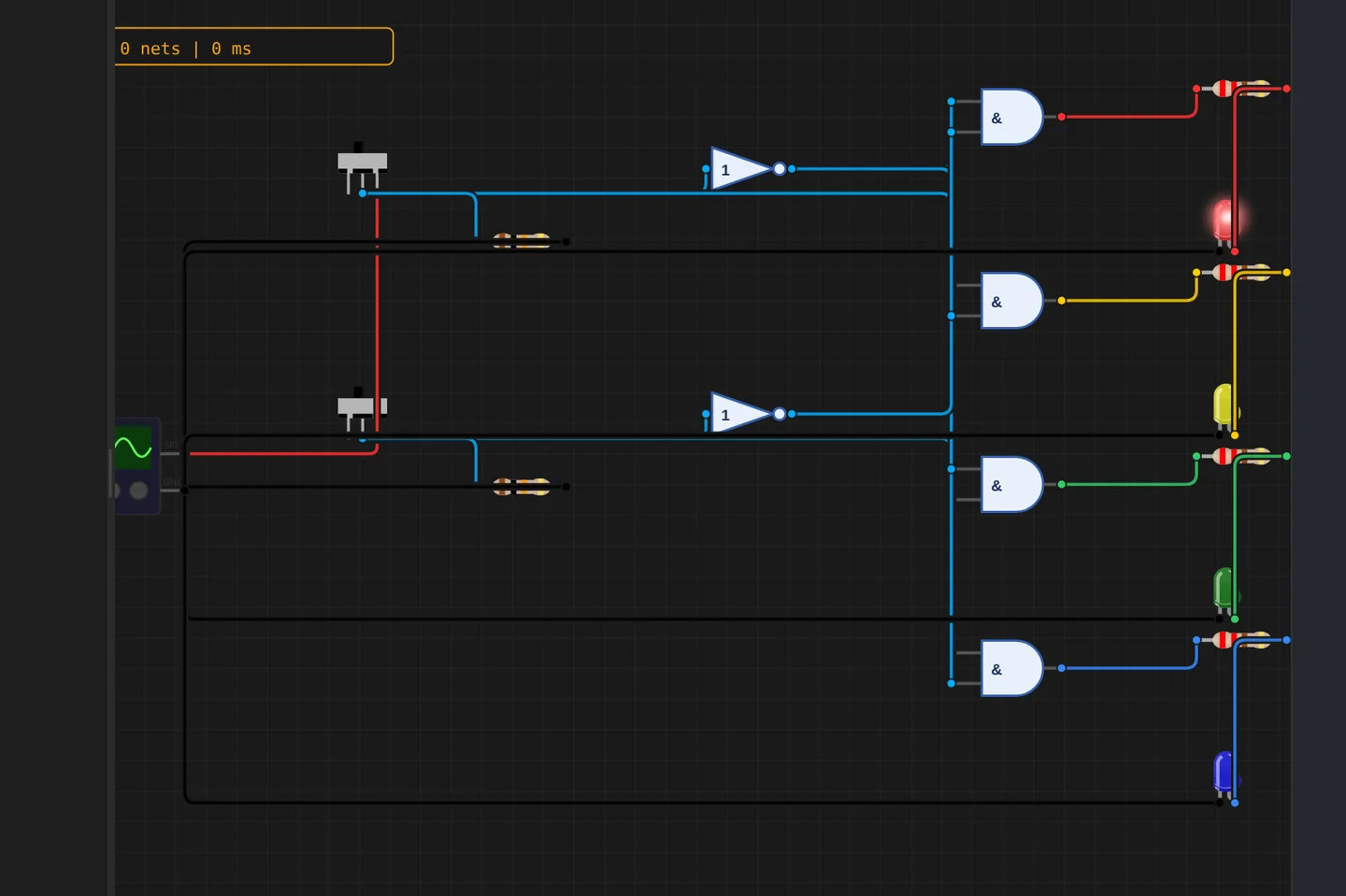
Adders, comparators, decoders, flip-flops and a 1-bit ALU slice: no microcontroller anywhere, just gates, switches and LEDs solved as a real net. The classroom half of electronics, without the breadboard.
The M5Stack Cardputer with its keyboard, Seeed's round display keeping time, Pimoroni's Badger 2350 driving e-paper, and DFRobot's UNIHIKER M10 in the catalogue alongside them. Their makers sent the hardware so the emulation could be checked against the real thing.
35 boards across 6 CPU architectures — AVR8, ARM Cortex-M, ARM Cortex-A, RISC-V, Xtensa, and Linux. Including partner boards from Pimoroni, M5Stack, Seeed Studio and DFRobot. All running locally, no cloud needed.






One institution contract gives every student in the class a full Pro account. No per-seat checkout, no card details in a classroom.
Private projects, BOM and schematic exports and GitHub Sync, for everyone enrolled.
Billed once to your institution, per semester or per year. Volume pricing on request for large cohorts.
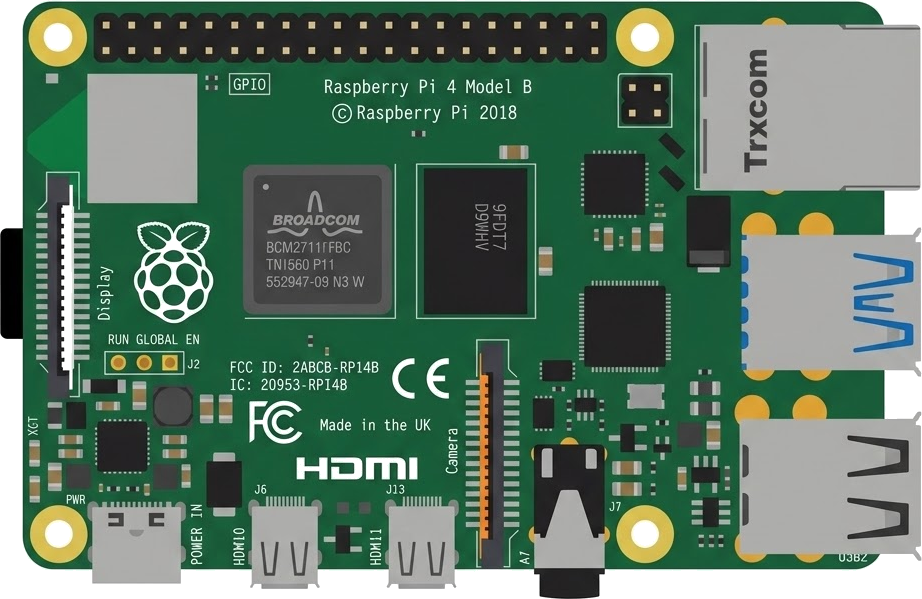
Arduino, ESP32, RP2040, STM32, ATtiny and Raspberry Pi, with SPICE analog solved alongside the firmware. Not a sandboxed mock.
The simulator stays free forever, WiFi with internet included. Paid plans unlock the Linux and STM32 boards, custom WiFi networks and the local network gateway. Maker and Pro add the AI agent; No AI leaves it out.
Discover the simulator + light AI help.
The full workbench, zero AI. You write every line.
For makers shipping real circuits with AI help.
Private projects, GitHub Sync and BOM exports.
Questions, bugs and ideas: the Discord and the issue tracker are open, and so is every line of the simulator.
An interactive ESP32 circuit simulation you can run free in your browser on Velxio, by felipe021-com.
#include <TinyGPSPlus.h>
#include <SPI.h>
#include <SD.h>
#include <Wire.h>

uint8_t mpuEndereco = 0x68;
uint8_t mpuQuem = 0;
bool mpuOk = false;

const float ACC_LSB_POR_G    = 4096.0f;  // faixa +-8 g
const float GYRO_LSB_POR_DPS = 65.5f;    // faixa +-500 graus/s

// Aceleracao em g, giroscopio em graus/s, temperatura do sensor em graus C
float ACCX = 0, ACCY = 0, ACCZ = 0;
float GYROX = 0, GYROY = 0, GYROZ = 0;
float TEMPM = 0;

bool mpuEscrever(uint8_t reg, uint8_t valor) {
  Wire.beginTransmission(mpuEndereco);
  Wire.write(reg);
  Wire.write(valor);
  return Wire.endTransmission() == 0;
}

bool mpuLerRegs(uint8_t reg, uint8_t* buf, uint8_t n) {
  Wire.beginTransmission(mpuEndereco);
  Wire.write(reg);
  if (Wire.endTransmission(false) != 0) return false;
  if (Wire.requestFrom((int)mpuEndereco, (int)n) != n) return false;
  for (uint8_t i = 0; i < n; i++) buf[i] = Wire.read();
  return true;
}

bool mpuIniciar() {
  // procura em 0x68 e depois 0x69
  bool achou = false;
  for (uint8_t end = 0x68; end <= 0x69; end++) {
    Wire.beginTransmission(end);
    if (Wire.endTransmission() == 0) { mpuEndereco = end; achou = true; break; }
  }
  if (!achou) return false;

  if (!mpuLerRegs(0x75, &mpuQuem, 1)) return false;   // WHO_AM_I

  if (!mpuEscrever(0x6B, 0x01)) return false;  // acorda, clock do giroscopio
  delay(100);
  mpuEscrever(0x19, 9);      // taxa de amostragem interna: 100 Hz
  mpuEscrever(0x1A, 0x04);   // filtro digital ~21 Hz
  mpuEscrever(0x1B, 0x08);   // giroscopio +-500 graus/s
  mpuEscrever(0x1C, 0x10);   // acelerometro +-8 g
  mpuEscrever(0x1D, 0x04);   // filtro do acelerometro (so existe no 6500; no 6050 e ignorado)
  delay(50);
  return true;
}

// ---------------- GPS ----------------
// O baud tem que ser o mesmo que o modulo esta usando (9600 de fabrica;
// 115200 se voce rodou config_gps_10hz.ino e a configuracao foi salva).
#define GPS_BAUD 9600
TinyGPSPlus gps;

// Pinos (mantidos como no seu codigo)
#define LED 4
#define LED2 2
#define ACELERADOR 32
#define FREIO 33
#define VOLANTE 34
#define PRESAO_OLEO 25
#define TEMPERATURA_MOTOR 26
#define GPS_RX 16
#define GPS_TX 17
#define SD_CS 5
#define SD_SCK 18
#define SD_MISO 19
#define SD_MOSI 23
#define BOTTON 27
#define MPU_SDA 21
#define MPU_SCL 22

File arquivo;

// Controle de gravacao
bool gravando = false;
bool ultimaLeituraBotao = HIGH;
bool estadoEstavelBotao = HIGH;

unsigned long tempoDebounce = 0;
const unsigned long debounce = 50;

unsigned long ultimaGravacao = 0;
const unsigned long intervalo = 100;  // 10 Hz

// LED de gravacao sem delay()
unsigned long ultimoPisca = 0;
bool ledPiscaEstado = false;

// Flush periodico no SD
unsigned long ultimoFlush = 0;
const unsigned long intervaloFlush = 2000;

char nomeArquivo[20];

// Cria um arquivo novo sem sobrescrever os anteriores
bool iniciarGravacao() {
  int numero = 1;

  while (numero <= 999) {
    snprintf(nomeArquivo, sizeof(nomeArquivo), "/CT%03d.CSV", numero);
    if (!SD.exists(nomeArquivo)) break;